


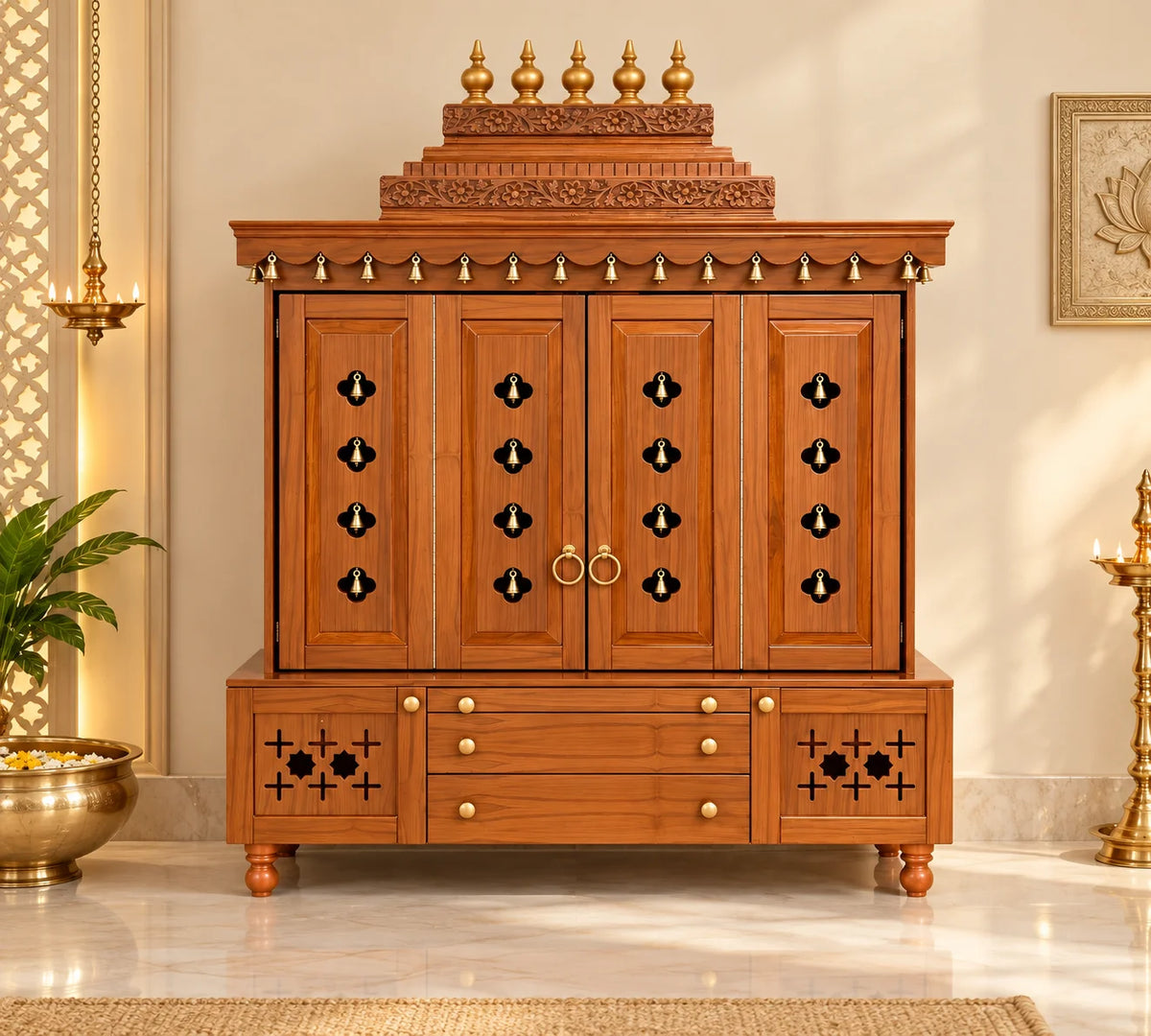


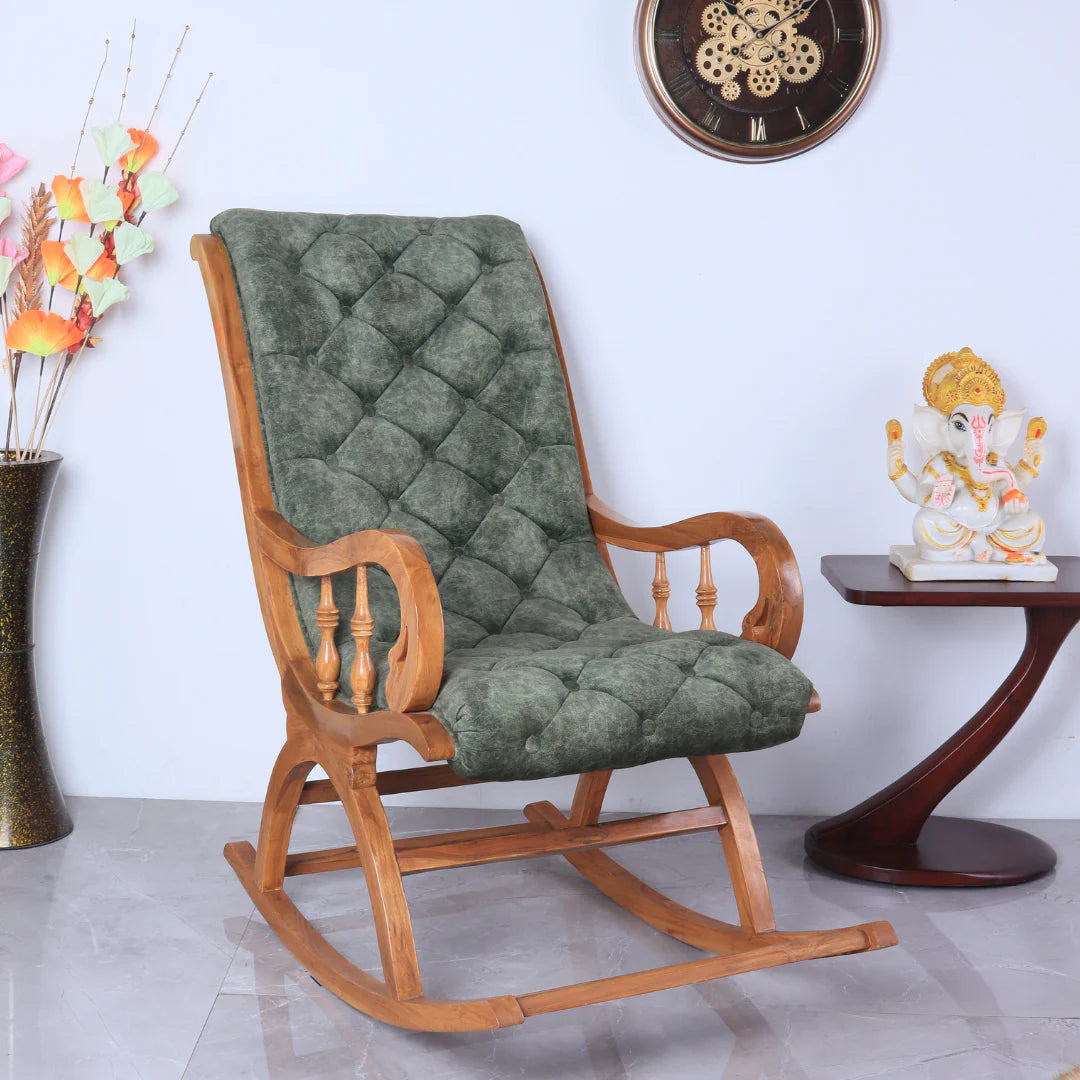


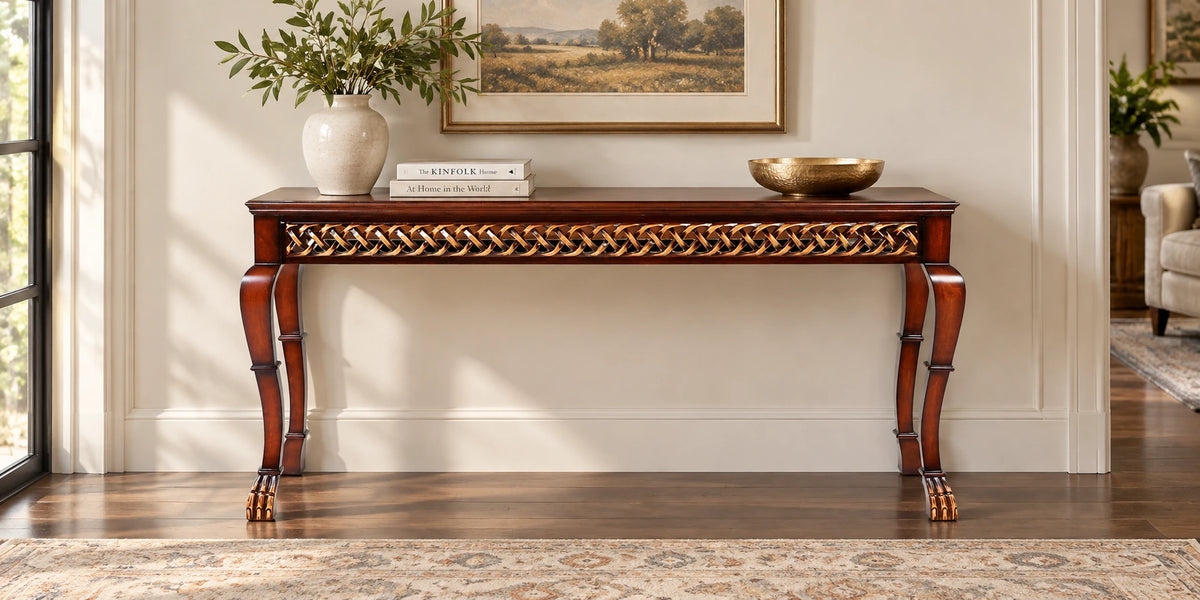











The wood
Supreme teak, and why we insist on it.
Teak is the reason a mandir lasts three generations instead of five years. Here is what actually makes it different, in plain language.
- Tectona grandisThe true teak tree
- Natural oilsWater, rot & termite resistant
- Season-smartStable across humidity
- Solid teakSolid teak & teak ply

What is teak, and why is it so great?
Teak comes from the Tectona grandis tree, native to South and Southeast Asia. Valued the world over for its strength, quality and looks, it's rightly called the king of woods — the timber of fine furniture, temples and even boats.
Teak trees take many years to mature, so plantations are carefully managed and responsible harvesting is limited. That slow growth is exactly what makes the wood so dense and stable.
It's teak's natural properties — its oils, its tight grain, its weight — that make it such a remarkable wood to build with, and to live with.
Grades
Not all teak is the same.
Slow-grown teak is the benchmark — tight-grained and high in natural oil. It is what we use for our premium carved mandirs and it is why those pieces cost what they do.
Plantation teak grows faster, with wider growth rings and a lighter colour. It is a good, honest wood and we use it where it belongs, but it is not the same material and we always say so on the product.
Anyone selling you a carved six-foot temple at a price that seems too good is not selling you seasoned 100% teak. That is simply arithmetic.
What sets teak apart
Built by nature to last
Durability
Teak's natural oils make it extremely durable, even in harsh weather — it holds its shape and strength for decades.
Water resistance
Superior resistance to water and humidity — so good it's the wood of choice for outdoor furniture and boats.
Pest resistance
Naturally resistant to termites and wood-eating insects, without the heavy chemical treatment other woods need.
Our teak quality standards
From log to mandir.
-
1
Selection
Timber is bought in the log and inspected for grain and defect before we pay for it.
-
2
Seasoning
It is seasoned until the moisture content is right. Rushing this is the single biggest cause of furniture that cracks later.
-
3
Cutting and carving
Cut to the piece, then hand-carved. The carving is done by people, not a router following a file.
-
4
Finishing
Sanded through grades and polished so the grain still reads through the finish.
Checked before it leaves
Our pre-dispatch checklist
- Teakwood — solid teak and teak ply, as listed on each product
- Seasoned and settled — stable across humidity
- Clean joinery — square, tight and crisp mouldings
- Even, hand-finished sheen on every surface
- Hardware fitted — doors, drawers and hinges tested
- Packed and photographed before dispatch
Teak questions
Questions people ask
Why is teak called the king of woods?
Because it combines strength, beauty and natural resistance to water, rot and insects better than almost any other wood — which is why it has been used for fine furniture and boats for centuries.
What teak does DZYN use?
Teak (Tectona grandis) from Myanmar, historically prized for its density, high natural oil content and even golden grain.
How can I tell solid teak from veneer?
Look at the edges and the inside of a door or drawer. Solid wood shows continuous grain wrapping the edge; veneer shows a thin face layer over a different core.
Is teak furniture suitable for humid Indian weather?
Yes. Well-seasoned teak is remarkably stable across humidity, so it handles monsoons and dry winters without warping.
Will it crack?
Properly seasoned teak moves very slightly with the seasons. A hairline seasonal line can appear and is characteristic of solid wood; splitting is not, and is covered by the warranty.
Is teak termite-proof?
Teak's natural oils and density make it highly resistant to termites and wood-eating insects — far more than most furniture woods.
Does it need oiling?
Not routinely. Keep it out of standing water and direct heat, dust it with a dry cloth, and it will look after itself.
Why is teak expensive?
It grows slowly, it is bought by weight in the log, and a great deal of it is lost in cutting and carving. You are paying for the tree and for the hours.
Is all DZYN furniture made of teak?
Our furniture and mandirs are built in solid wood: solid teak and teak ply, as listed on each product. Our premium carved mandirs are 100% teak; where we use plantation teak, we say so on the product.
Want to see the grain up close?
We will send you close-up photographs of the actual piece before it ships.