
Journal · mandir for home
Difference Between Wall-Mounted and Floor-Rested Pooja Mandirs
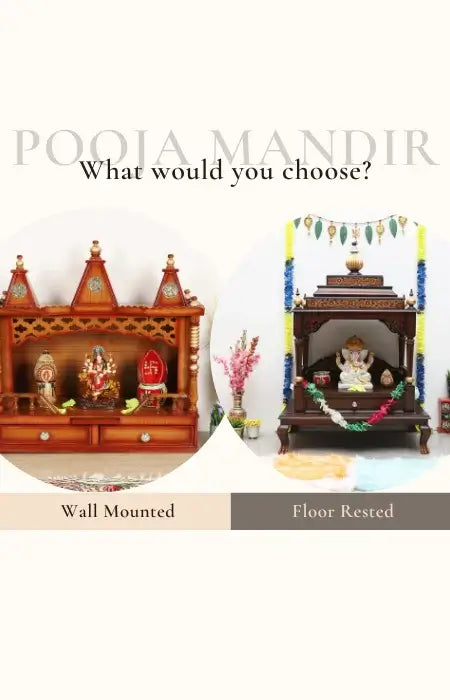
A Pooja Mandir is the most important place for every Hindu. It holds profound significance in Hindu Culture and serves as a dedicated space to worship and connect to the divine. The presence of a mandir at home ensures positivity, promotes spiritual well-being and removes negativity from the house. Having a pooja mandir at home symbolizes faith, devotion, and the importance of maintaining a sacred space for spiritual growth and harmony.
Types of Pooja Mandir Based on Size
Selecting the right size for your pooja mandir is crucial, as it impacts the functionality, aesthetic appeal, and spiritual atmosphere of your home. One should carefully select the size of the pooja mandir based on the available space in your house and should accommodate your religious needs. Here, we explore the two main types of pooja mandir:
1. Floor Rested Pooja Mandir

Floor Rested Pooja Mandirs are spacious and grounded, ensuring ample space in the pooja area to store and organize the pooja materials. These temples are usually larger and intricately designed with multiple shelves, and drawers for storing pooja items.
a.) Advantages
Stability and Strength
These Temples are placed directly on the floor. These temples are sturdy and stable and can withstand heavy-weight deities and a large number of idol statues.
Accessibility
Floor Rested Pooja Mandirs are easily accessible for daily rituals. It is much more comfortable to sit and do pooja in a Floor Rested Pooja Mandir.
Ample Storage
Floor Rested Pooja Mandirs offer great convenience for storing all your pooja essentials, making it much more convenient to do pooja.
Customized
There are many options to customize a floor rested pooja Mandir, and it offers many personalized areas and spaces to customize in comparison to a smaller wall-hanging pooja mandir.
b.) Disadvantages
Mobility
Floor Rested Pooja Mandirs are generally heavy, and once placed it is difficult to move from one place to another.
Space Requirements
Floor Rested Pooja Mandir requires a good amount of floor space to be kept, as it is placed directly on the floor. Floor-rested pooja mandirs are ideal for medium to large houses. These temples are ideal for creating a dedicated pooja area.
2. Wall Mounted Pooja Mandir
A wall-mounted pooja mandir is a modern, space-saving alternative, making it an ideal choice for Nuclear Families and Bachelors. It is a perfect solution for spiritual needs in smaller apartments in metro cities. These Mandirs are mounted on the wall, freeing up the floor space and providing a clean, minimalistic look.

a.) Advantages
Space Efficiency:
Wall-mounted pooja mandirs save space, as the temple does not touch the ground. These types of temples are an ideal choice for small apartments & Nuclear Families.
Modern Aesthetics
They offer a sleek and contemporary design that blends well with modern home decor.
Cleaner Look:
Since the pooja mandir is mounted on a wall, it stays out of reach of pets and young children, reducing the risk of disturbances.
b.) Disadvantages
Limited Storage
Wall Mounted Pooja Mandirs are smaller in size, hence the storage is quite limited, and all pooja materials can't be kept inside the Mandir, making it sometimes tedious and clumsy.
Keep reading
More from the journal

Top 10 Trending Home Temple Design Ideas
A home temple is known to be the inner soul of any house. Globalization has brought...

The Several Advantages of Having a Wooden Pooja Mandir in Your House
A pooja mandir made of wood is not just another piece of furniture; it is a...

Top Wooden Temple Designs for Home
There are lots of designs to explore while selecting a wooden temple for home. Depending on...
Choosing your first mandir?
Tell us about your home and we will help you pick the size, design and finish.