


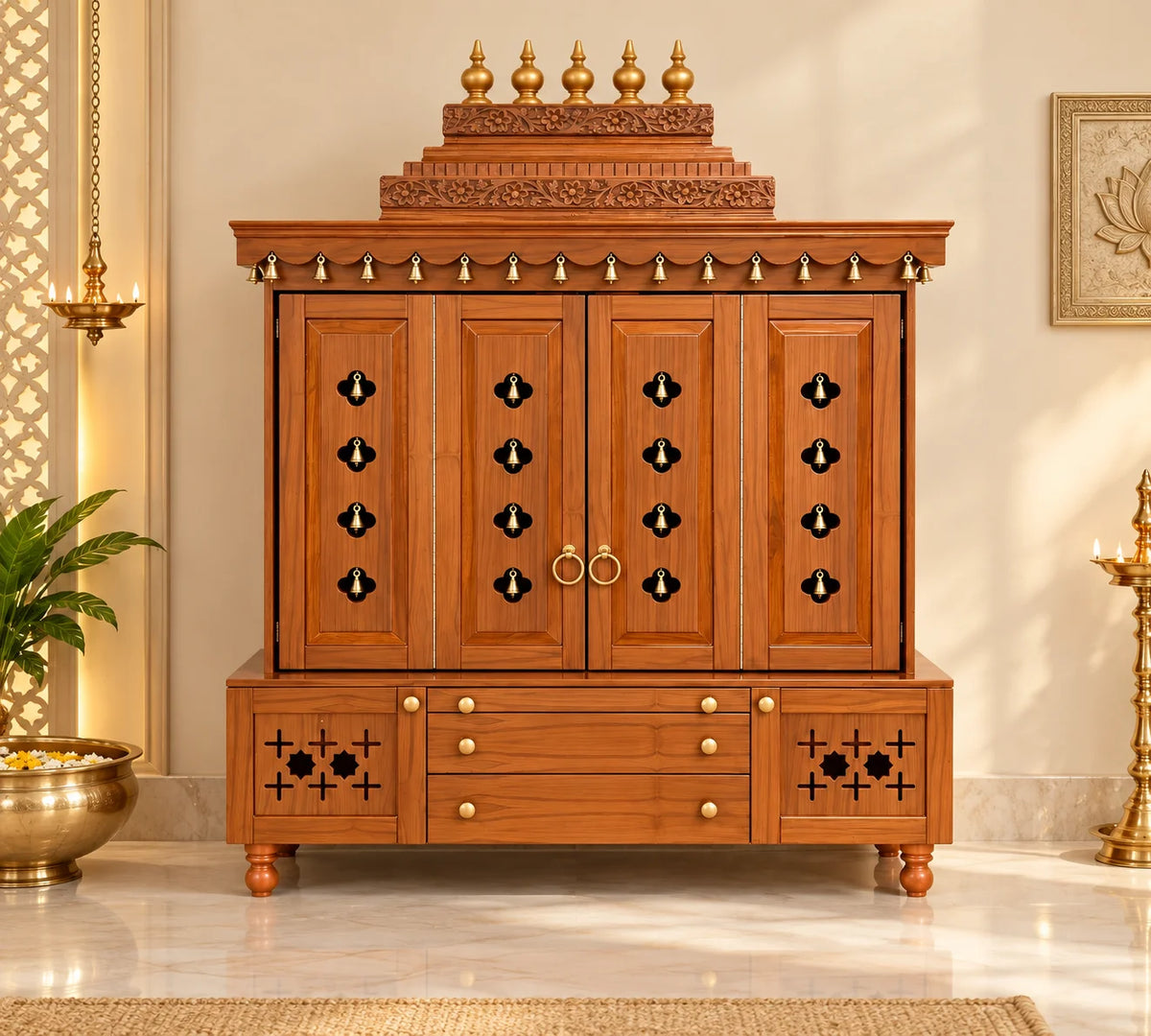


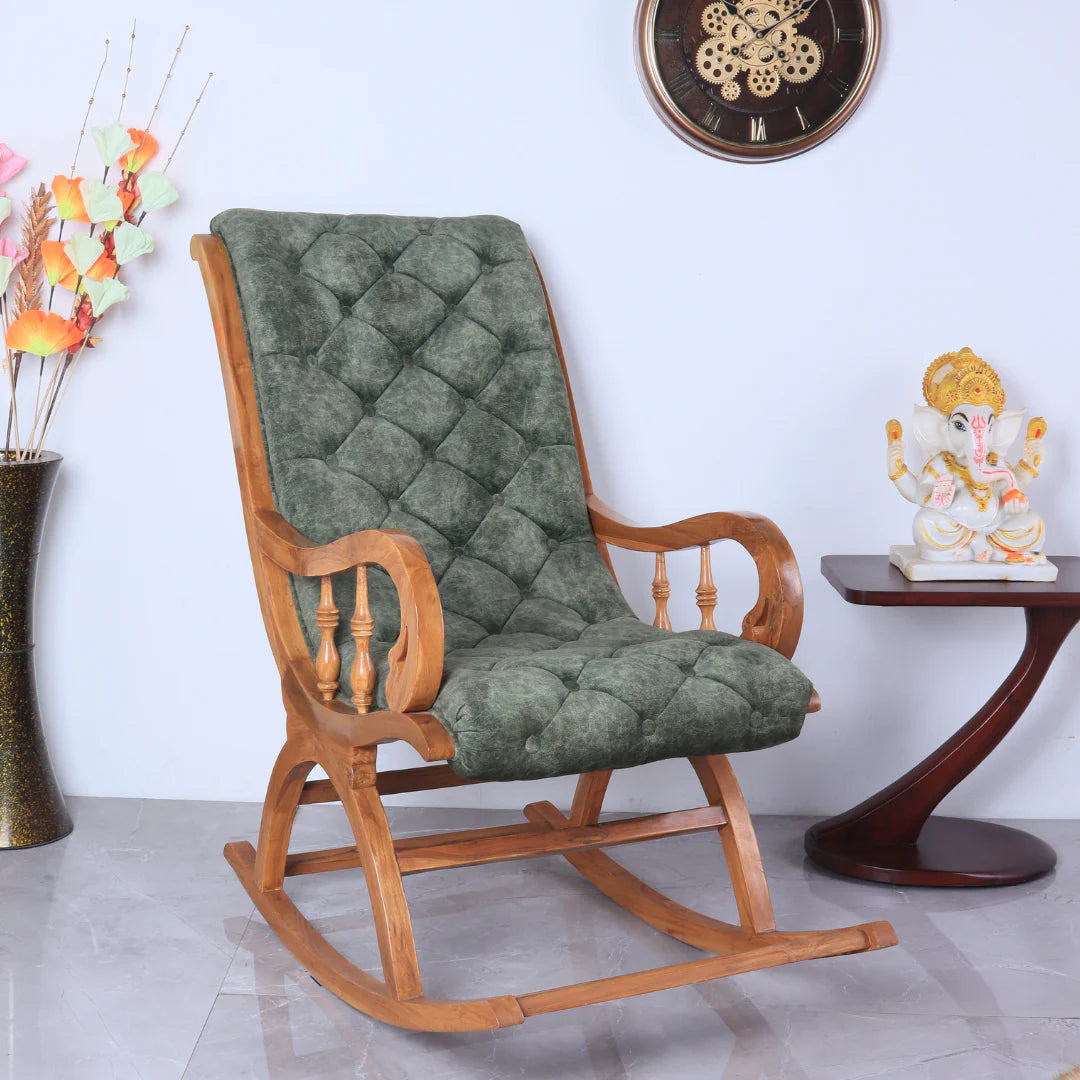


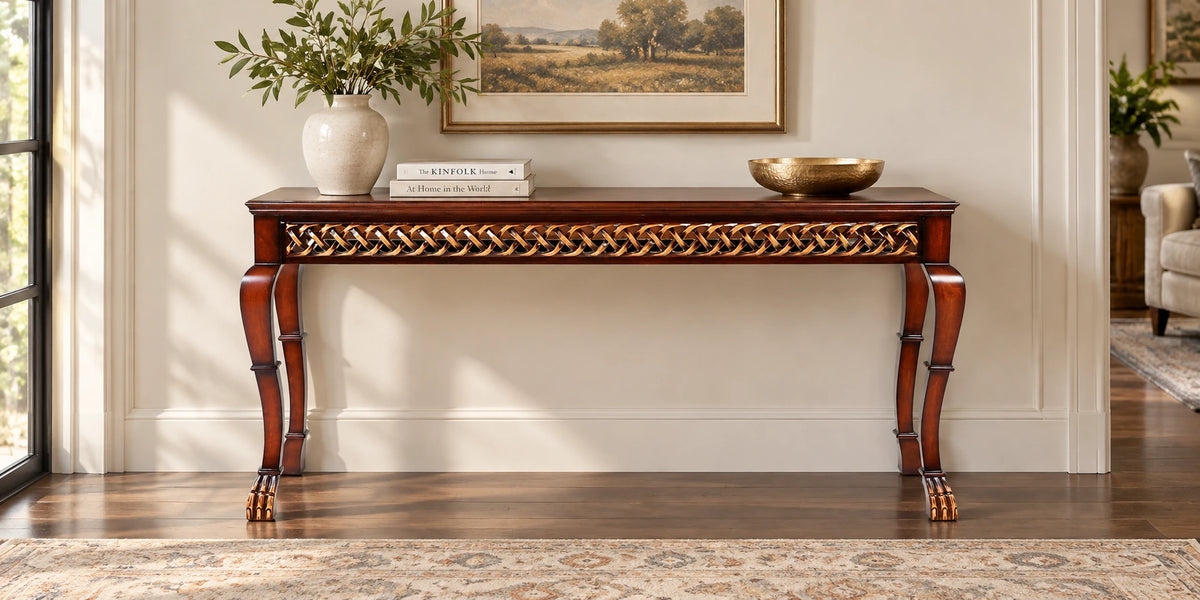












Teak wood vs sheesham wood
Teak Wood vs Sheesham Wood — Why Teak Wins
Both are real Indian hardwoods. But for a piece that holds lamps, water and daily worship for decades, the difference is measurable — here it is, point by point.
- 12Teak advantages
- 8Sheesham trade-offs
- 50+ yrsTeak lifespan with care
- 1Clear winner for mandirs
The head-to-head scorecard
Twelve tests. One clear winner.
| Test | 100% Teak | Sheesham | Winner |
|---|---|---|---|
| Durability | Exceptional — generations | Good — decades with care | Teak |
| Natural oils | High — self-protecting | Low — needs sealing | Teak |
| Water & humidity | Excellent resistance | Absorbs moisture, can swell | Teak |
| Termites & insects | Naturally resistant | Susceptible without treatment | Teak |
| Dimensional stability | Very stable, minimal warping | Moves with seasons | Teak |
| Cracking & checking | Rare | More prone in dry heat / AC | Teak |
| Holds fine carving | Crisp, lasting detail | Good, but can chip | Teak |
| Ageing | Deepens to honey-gold | Can fade or darken unevenly | Teak |
| Maintenance | Low — occasional wax | Regular oiling | Teak |
| Resale / heirloom value | Holds value | Lower | Teak |
| Upfront price | Premium | More affordable | Sheesham |
| Bold dark figure | Even, refined grain | Dramatic dark streaks | Sheesham |
Teak's advantages, counted
12 reasons teak is supreme
Natural oils protect it
Teak's own oils guard against water, rot and insects — no heavy chemicals needed.
Built for generations
Teak routinely lasts 50 years and more; it's the wood of temples and ships.
Resists humidity
Monsoons, coastal cities and steamy kitchens don't swell or warp it.
Termite-resistant
Dense and oil-rich, teak is avoided by termites and wood-borers.
Barely moves
Tight grain keeps doors, drawers and joints true through every season.
Rarely cracks
Handles dry North Indian winters and air-conditioned homes.
Holds carving crisply
Fine jaali and dome detail stay sharp for decades.
Safe near lamps & water
The right wood for a mandir that holds diyas, kalash and daily pooja.
Ages beautifully
Its honey-gold tone deepens with time instead of fading.
Low maintenance
Dust weekly, wax once or twice a year — that's all.
Refinishes like new
Solid teak can be sanded and re-polished again and again.
Heirloom value
Teak holds its worth — a piece you pass on, not replace.
The honest trade-offs
8 disadvantages of sheesham
Sheesham is a good wood — but these are the reasons we don't build mandirs in it.
Lower natural oil
Relies on surface finishes to keep water and insects out.
Moves with humidity
Expands and contracts through seasons; doors and drawers can stick.
Prone to cracks
Can check or split in dry heat, heaters or strong air-conditioning.
Needs regular oiling
Without upkeep it dries out and loses its lustre.
Susceptible to termites
Needs treatment to resist termites and wood-borers.
Uneven colour change
Can darken or fade patchily in sunlight.
Carving can chip
Fine detail is more vulnerable to chipping over time.
Shorter service life
Lasts decades, not generations, in heavy daily use.
Cost over time
Cheaper today, dearer over the years
Sheesham costs less upfront. Spread across the years it lasts, teak is the better buy.
| Teak | Sheesham | |
|---|---|---|
| Upfront cost | Higher | Lower |
| Yearly upkeep | Wax once or twice | Regular oiling & sealing |
| Typical lifespan | 50+ years | 15–25 years |
| Repairs & refinishing | Rarely needed | More often |
| Value per year of use | Better | Lower |
Tell them apart
How to recognise teak and sheesham
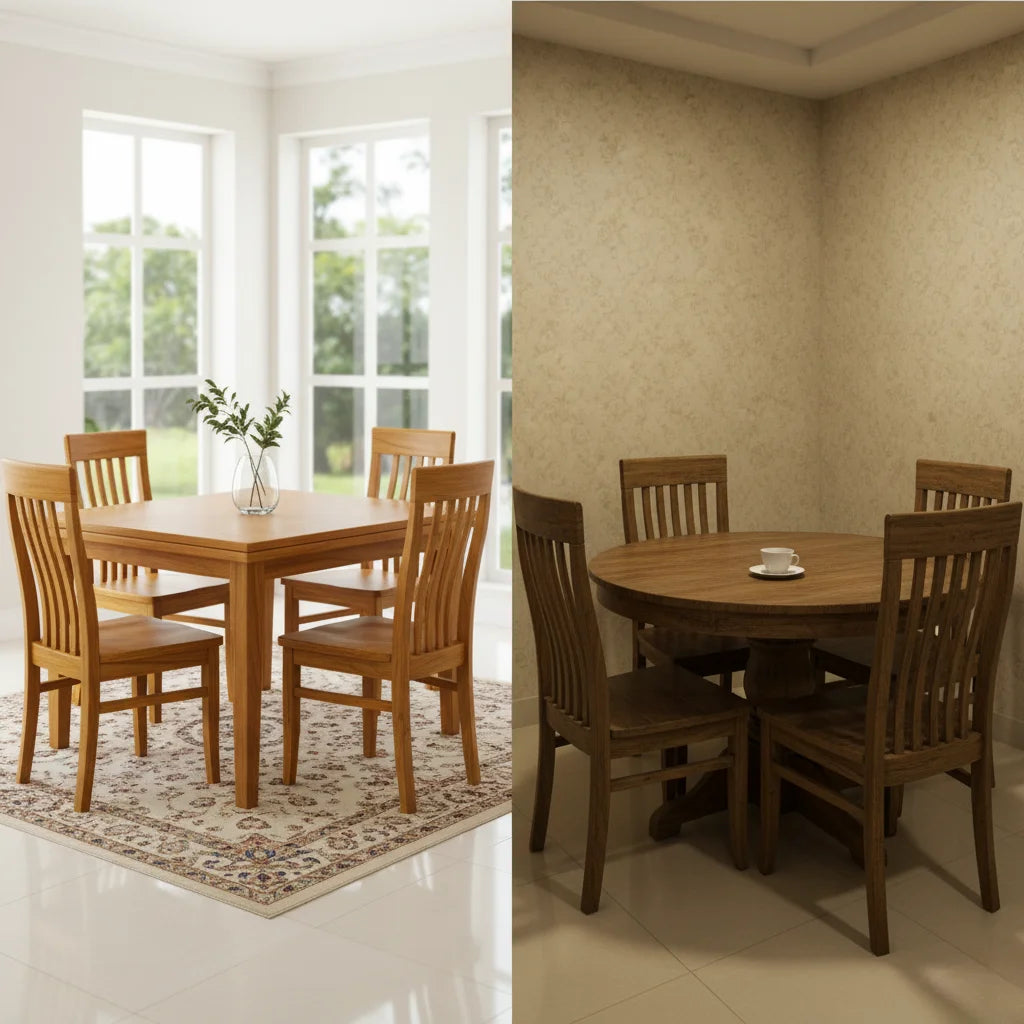
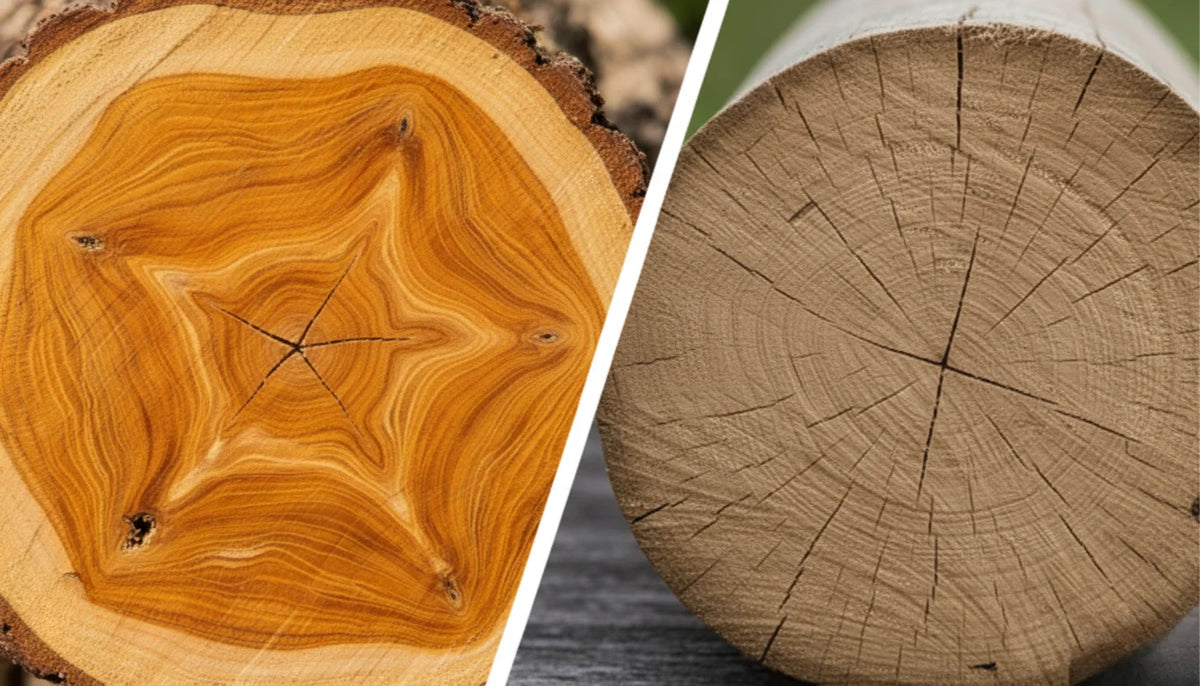
Colour
Teak is an even golden-brown; sheesham is darker, with bold brown-black streaks.
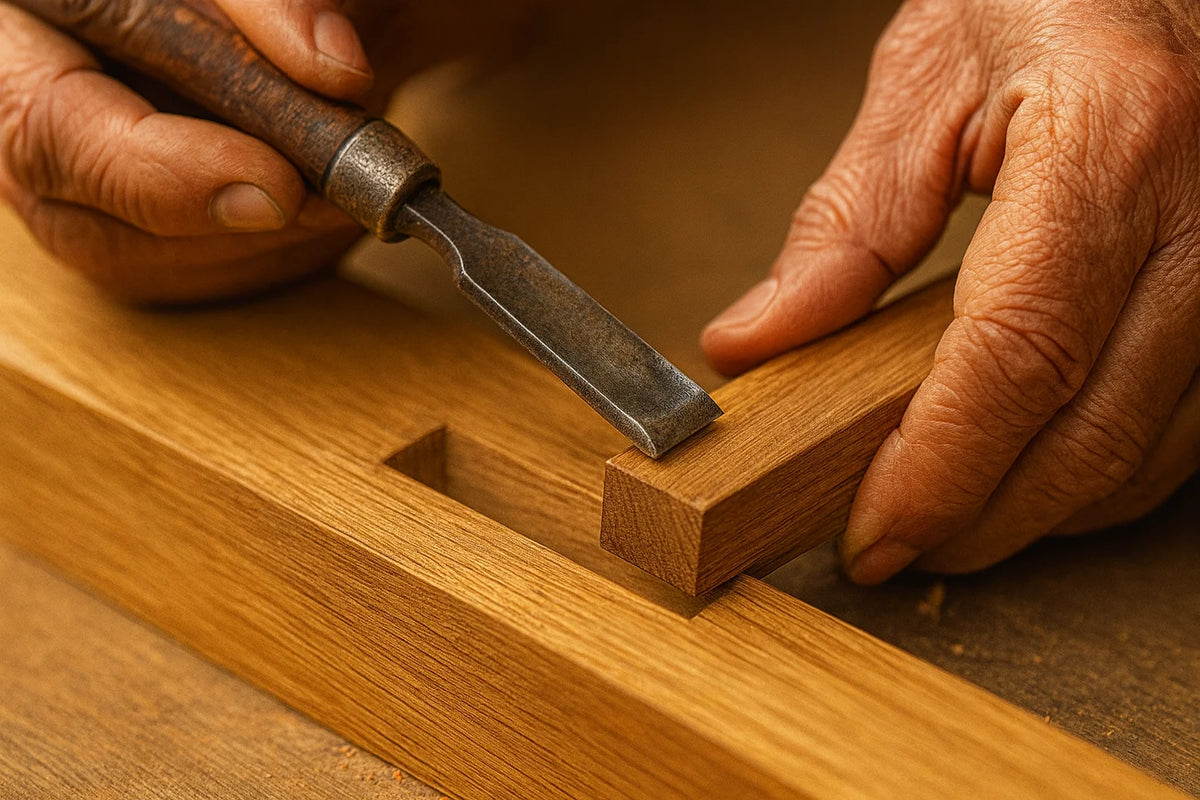
Grain
Teak's grain is straight and fine; sheesham's is interlocked and dramatic.
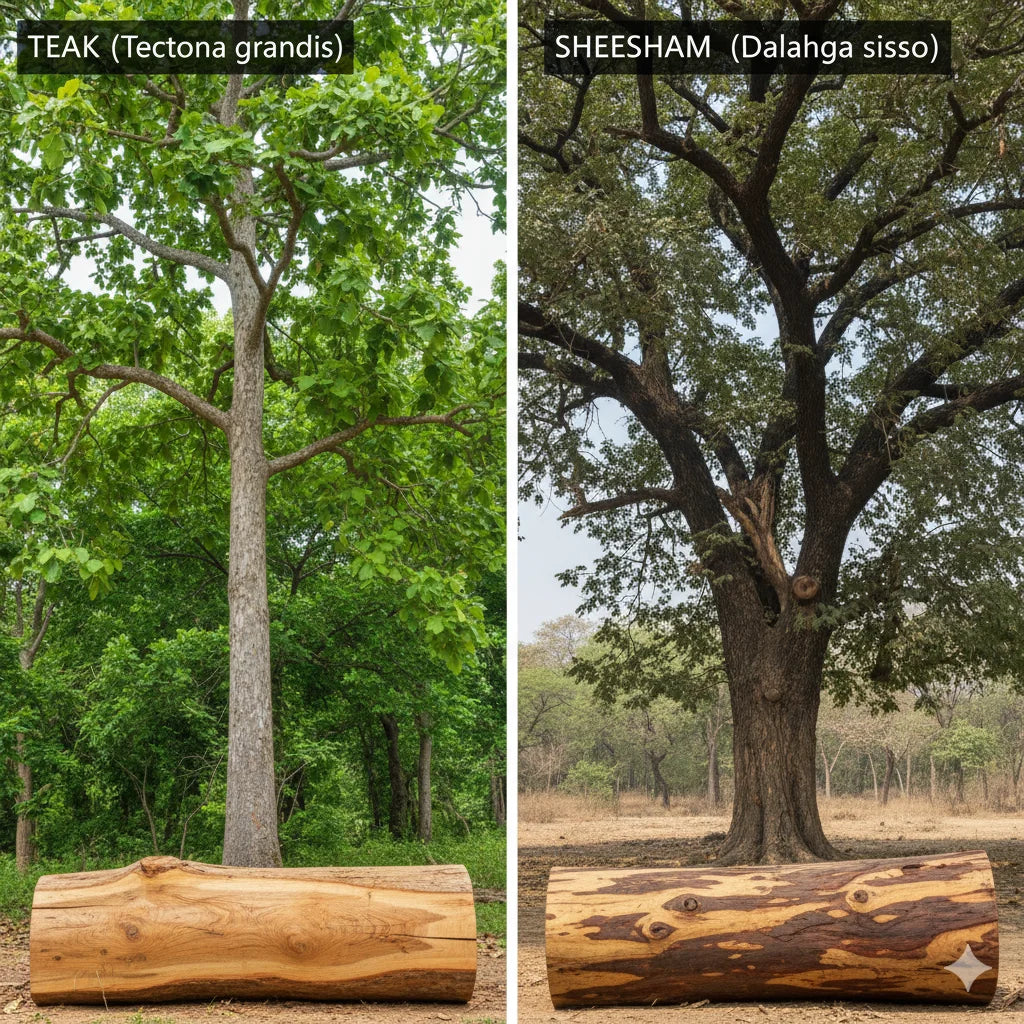
Touch
Raw teak feels slightly oily; sheesham feels drier.
Ask the maker
An honest maker names the species and lets you see the raw wood.
The verdict, by use
Which wood for which piece?
| For… | Choose | Why |
|---|---|---|
| A pooja mandir | Teak | Safe near lamps and water; carving stays crisp for generations |
| Humid or coastal cities | Teak | Resists swelling in Mumbai, Chennai, Kolkata |
| Rooms with AC & heating | Teak | Stays stable where sheesham can crack |
| Dining chairs & daily-use pieces | Teak | Joints stay tight under daily use |
| A budget piece for a dry room | Sheesham is fine | Good value where humidity and wear are low |
Teak vs sheesham FAQs
Your questions, answered
Is teak really better than sheesham?
For durability, water and termite resistance, stability and low maintenance, yes. Sheesham wins on upfront price and a bolder dark grain.
Why is teak more expensive?
Teak trees take many years to mature and harvesting is limited — the same slow growth that makes the wood so dense, oily and stable.
Which wood is better for a pooja mandir?
Teak. A mandir holds lamps, water and daily worship; teak's oils and stability protect the carving and finish for generations.
Does sheesham crack?
It can, especially in dry heat or strong air-conditioning, because it moves more with changes in humidity.
Is sheesham termite-proof?
Not naturally — it needs treatment. Teak's oils and density make it highly resistant on its own.
How long does teak furniture last?
With light care — weekly dusting and a yearly wax — 50 years and more.
What wood does DZYN use?
Teakwood: solid teak and teak ply, as listed on each product.
Choose the wood your grandchildren will inherit
Every DZYN mandir is teakwood: solid teak and teak ply, as listed on each product.