

















Vastu guide
Where to place your pooja mandir.
A calm, correct placement invites positive energy. Here is simple, practical Vastu guidance for a home temple.
Direction finder
Tap a direction to see if it suits your mandir
North is at the top. Stand in the centre of your home with a compass app, and find the corner or wall you have in mind.
- Ideal
- Good
- Acceptable
- Avoid
NW · Vayavya
North-West
The air zone: restless and changing. Workable for a small wall mandir when the better walls are taken, but not a first choice.
How to use it
- Keep the mandir small and wall-hung
- Face the idols west, so you pray facing east
- Keep the area calm and uncluttered
Watch out for
- Avoid heavy floor mandirs here
N · Uttara
North
The direction associated with Kubera and prosperity. Praying while facing north is considered auspicious in many traditions.
How to use it
- Place the mandir on the north wall
- You face north while praying
- Keep it light and open; this wall suits wall-hung designs
NE · Ishaan
North-East
The corner of divine energy and first light, traditionally the most auspicious place for a home temple.
How to use it
- Place the mandir in the north-east corner of the home or of the room
- Face the idols west, so you face east while praying
- Keep this the lightest, least cluttered corner in the house
Watch out for
- No heavy storage, lofts or beams above it
W · Paschim
West
Works when the north-east, east and north aren't available. The idols face east, toward the rising sun.
How to use it
- Place the mandir on the west wall
- Idols face east; you face west while praying
- Choose a mandir with a solid back panel
C · Brahmasthan
Centre
The heart of the home. In bungalows and courtyard houses the centre is revered; in apartments it's rarely practical.
How to use it
- Keep the centre open and full of light
- A low, open mandir suits the space
- Never build a wall or heavy furniture over it
Watch out for
- Rarely workable in flats: choose north-east or east instead
E · Purva
East
The direction of the rising sun. A mandir on the east wall lets morning light reach the deities.
How to use it
- Place the mandir on the east wall
- Idols face west; you face east while praying
- Open the curtains at sunrise: the light is part of the blessing
SW · Nairitya
South-West
The heavy, earth zone: best for the master bedroom and storage, not for worship.
How to use it
- Use this corner for wardrobes or the master bed
- Move the mandir to the north-east, east or north
Watch out for
- Don't place the mandir here, even temporarily
S · Dakshin
South
Traditionally avoided: on a south wall, the family would face south while praying.
How to use it
- Choose the east or north wall instead
- If the south wall is the only option, ask us: a corner or tabletop mandir on another wall usually works
Watch out for
- Never let the worshipper face south
SE · Agneya
South-East
The fire corner: right for the kitchen, not the mandir. (Inside the mandir itself, the diya belongs in the south-east.)
How to use it
- Keep this corner for the kitchen or electricals
- Place the mandir north-east, east or north
Which way to face
The wall decides the direction you pray
Idols ideally face west or east, so the family faces east — the rising sun — or north while praying.
| Mandir on the | Idols face | You face | Verdict |
|---|---|---|---|
| East wall | West | East | Most recommended |
| North wall | South | North | Good |
| West wall | East | West | Acceptable |
| South wall | North | South | Avoid |
Real-home use cases
When your home isn't a textbook plan
Ten situations we hear about every week — and what to do in each.
There's no free north-east corner
- Use the east wall of the living room instead
- A wall-hung mandir keeps the floor free
- Make sure the idols face west
You live in a studio or 1BHK
- Choose the east or north wall of the living area
- Pick a mandir with doors and close it at night
- Keep about 30 in clear in front for prayer
The only space is in the kitchen
- Use the kitchen's north-east, away from the stove and sink
- Choose doors, and close them while cooking
- Never place the mandir above the stove
The bedroom is the only option
- Use the bedroom's north-east corner
- Your feet shouldn't point at the mandir while you sleep
- Close the doors at night, or draw a curtain
The pooja room shares a wall with a toilet
- Don't place the mandir against the shared wall
- Move it to the opposite wall
- Choose a solid back panel, and keep the toilet door closed
The space under the staircase looks perfect
- Avoid it for the mandir — people walk overhead
- Use that space for storage instead
- Find a wall on the east or north side
You have a duplex or multi-storey home
- Prefer the ground floor
- Avoid the basement
- Check there's no bathroom directly above the mandir
You rent and can't drill
- Choose a freestanding floor or tabletop mandir
- Raise the idols on a sturdy base or platform
- It moves with you to the next home
It's for a shop or office
- Place it in the north-east of the office
- Mount it above eye level
- Keep it clean — light a lamp at opening time
Placement rules
What to do, and what to avoid
- Place the mandir in the north-east; if that is not possible, east or north.
- Face the idols west or south, so you face east (best) or north while praying.
- Keep the mandir a few inches off the floor, and the space clean and clutter-free.
- Use a threshold or small platform so the deities are slightly elevated.
- Leave about an inch between the idols and the back panel for air.
- Place the diya in the south-east of the mandir itself.
- Choose wood — teak is traditional — and light walls: white, cream or pale yellow.
- Store only pooja items in the mandir's drawers, and keep them tidy.
- Light a lamp and ring the bell daily to keep the space alive.
- The bedroom, and sharing a wall with a bathroom or toilet.
- Placing the mandir under a staircase or beam.
- Facing the idols directly south.
- Storing anything unrelated — clutter or old items — inside the mandir.
- Idols facing each other, or placed directly on the floor.
- Broken or chipped idols — replace them respectfully.
- Photographs of departed ancestors inside the mandir — give them their own place.
- Oversized idols in a small home — keep them in proportion to the space.
Your placement checklist
Ten steps to place your mandir right
Tick them off as you go, then send us your wall and we'll suggest the size.
Done? Send us a photo of your wall and we'll suggest the size.
Send on WhatsAppPlaced with care
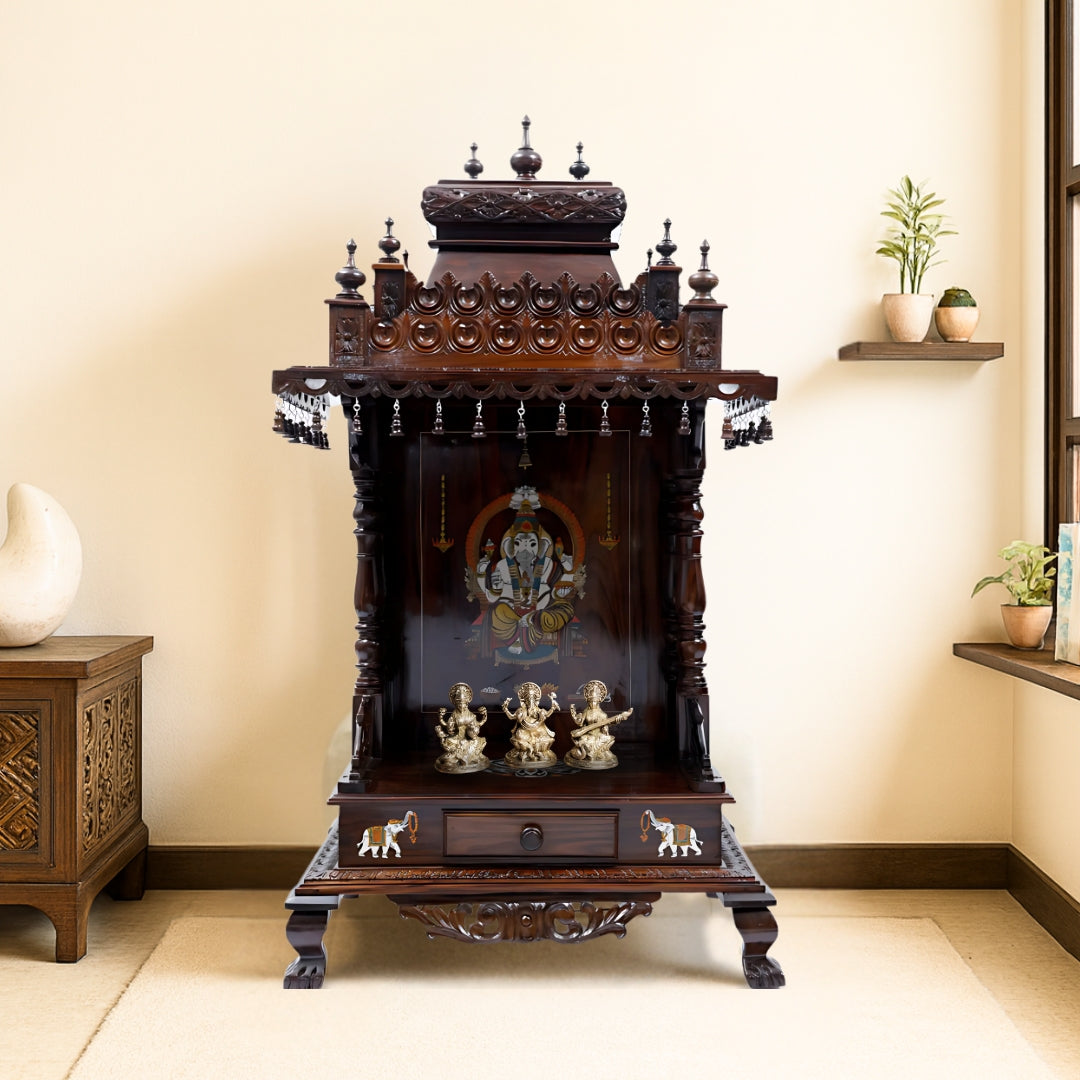
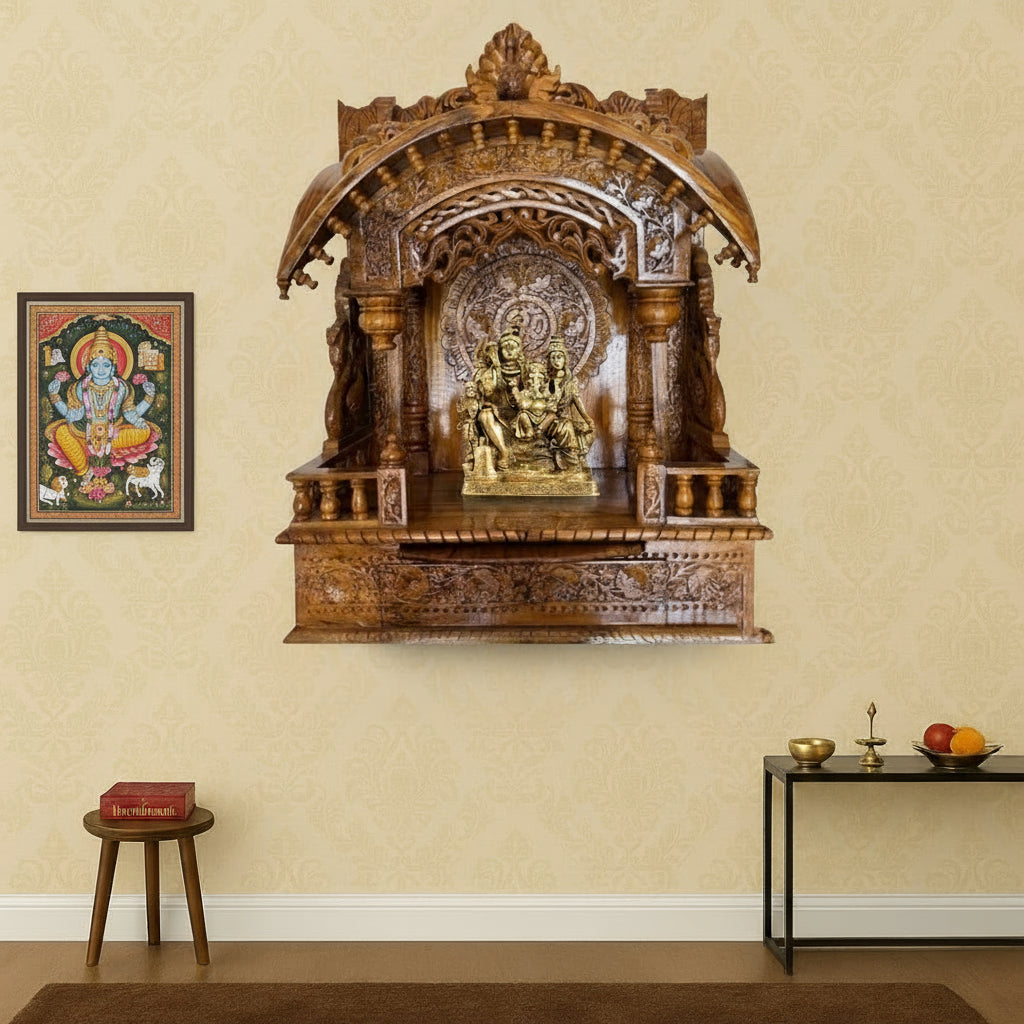
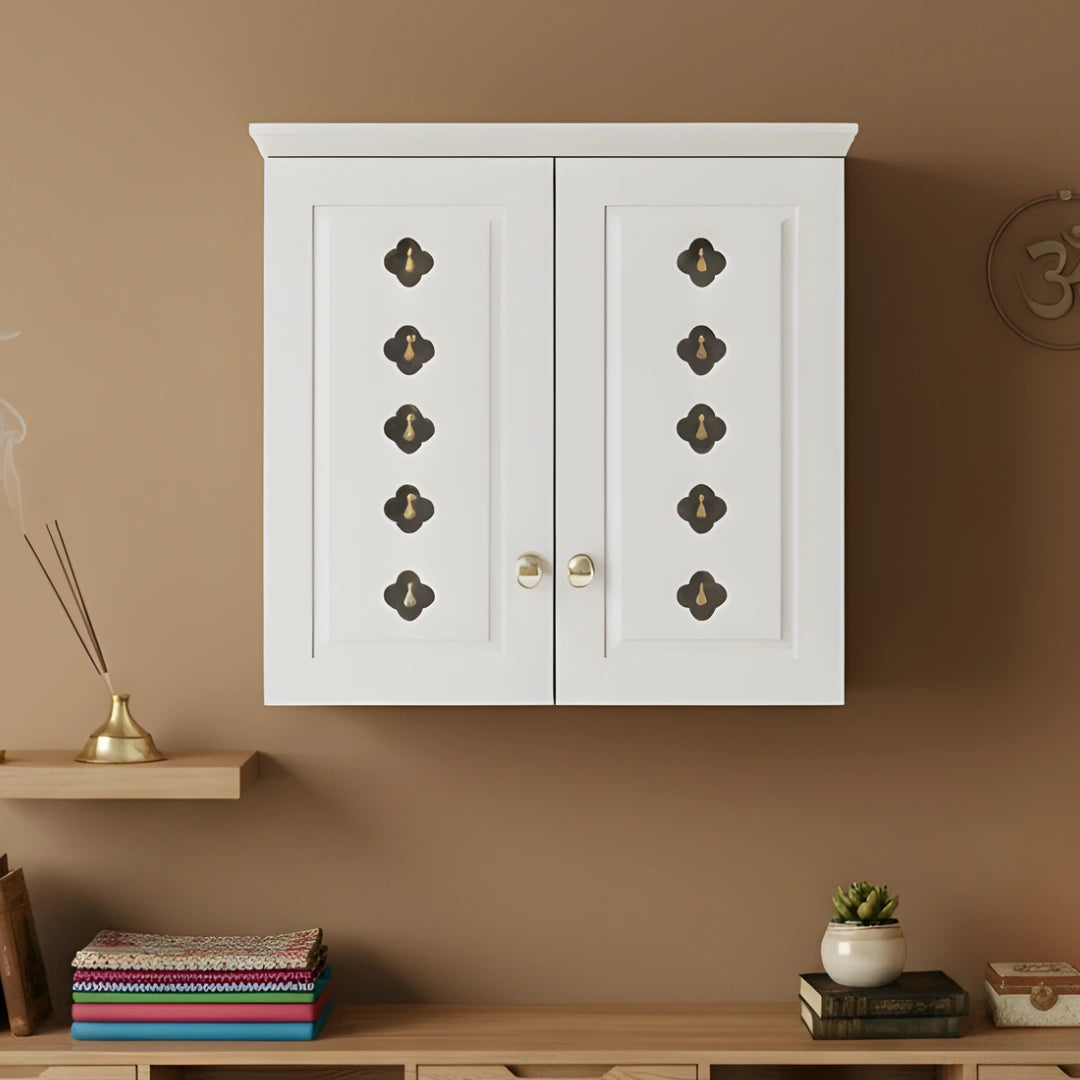
Mandirs in the right corner
Vastu questions
Answered, simply
Which direction is best for a home mandir?
The north-east (Ishaan) corner is traditionally the most auspicious. The east and north walls are the next best choices.
Which direction should I face while praying?
East is the most recommended, toward the rising sun; north is also considered auspicious. Place the idols so they face west or east.
Can the mandir be in the bedroom?
Only if there's no alternative. Use the bedroom's north-east corner, make sure your feet don't point toward it while sleeping, and choose a mandir with doors to close at night.
Can I place the mandir in the kitchen?
Yes, in the kitchen's north-east, well away from the stove and sink — never above the stove. A mandir with doors lets you close it while cooking.
How high should the mandir be?
The idols should sit at about chest level when you're seated — a sanctum around 30–36 in for floor-seated prayer, higher if your family stands for aarti.
Is a wooden mandir good as per Vastu?
Yes. Wood and marble are traditionally preferred, and teak is prized for its warmth, durability and natural oils.
What should never be kept in the mandir?
Broken or chipped idols, photographs of departed ancestors, unrelated storage and clutter — and keep dustbins well away from it.
Vastu is guidance, not a rulebook. Do what brings your home peace — and if a corner is tricky, message us and we'll suggest a size and orientation that works.
In depth
The complete Vastu placement guide
Read the full guide
A pooja mandir holds a special place in many homes. It is not only a place for prayer. It also supports daily discipline, respect for tradition, and a calm start or end to the day. When the mandir is placed in the right area, the space feels peaceful and easy to use. Good pooja mandir vastu placement also helps family members follow prayer rituals in a clean and steady way.
This pooja mandir placement guide explains where to keep a mandir at home and how to plan the space in a simple way. It covers pooja mandir vastu placement, idol position, room layout, and daily use. The aim is to help families choose a setup that feels practical, respectful, and suitable for regular worship. It also explains mandir direction in home in easy language.
Vastu Shastra focuses on balance in the home. It looks at direction, movement, light, and the use of each space. When these ideas are applied to a pooja area, it becomes easier to decide the right zone for prayer, the direction of idols, and the overall design of the mandir. This guide explains pooja room vastu in simple words so it is easy to follow in both apartments and larger homes. It also makes the rules easier to understand.
When a pooja mandir is planned with care, it supports both comfort and routine. It also helps you choose a design that suits your layout. Along with placement rules, this guide explains how the right wooden pooja mandir can support long-term use, neat storage, and a balanced look. The purpose of a mandir is not only to complete rituals. It is also to create a clean prayer space that feels calm every day and stays connected to tradition. Strong pooja mandir vastu placement starts with this balance.
Many homeowners also look at this topic because they want the prayer space to feel correct from the start and avoid later changes. A mandir is usually a fixed part of the home once installed, especially if it is wall mounted or built into furniture. That is why checking pooja room vastu before final placement is useful. It saves effort and helps the space remain suitable for years. The same check also supports daily balance in the prayer area. In this way, home temple vastu becomes easier to follow from the beginning.
Understanding the Importance of Pooja Mandir Vastu Placement
The placement of a pooja mandir matters in vastu because the prayer area should feel quiet, clear, and easy to maintain. A home has many active zones for sleep, cooking, work, and movement. The mandir should stay in a place where prayer can happen without constant disturbance. That is why mandir placement according vastu is often seen as the first step in planning the space. Proper pooja mandir vastu placement also gives the room a clear purpose.
When the pooja mandir is kept in the right spot, daily worship becomes easier to follow. The space feels more settled and less rushed. It also brings a sense of order to the home because the prayer area stays separate from busy household activity. This is one reason pooja room as per vastu is still important in modern homes. It also makes temple direction in home easier to plan with clarity.
Families also benefit when the prayer area is easy to reach during daily routine. A mandir placed in a clear and usable part of the home is more likely to stay active every day. This matters because regular use keeps the space clean, cared for, and spiritually meaningful for the household over time. A clear layout also supports home temple vastu in a practical way. It helps home temple vastu remain part of daily life without confusion.
Every direction in vastu is linked with a different use. The pooja area is usually connected with clarity, peace, and discipline. Correct mandir placement at home helps the prayer space stay away from cooking heat, bedroom clutter, and heavy movement areas. This gives the family a better setting for prayer and helps the area remain clean over time. Home temple vastu is not only about direction. It is also about how the space feels and functions each day. This is why the prayer zone should never be random.
Many homes do not have a separate pooja room. Flats and compact homes often need a smaller setup. That does not stop you from following pooja room vastu. A wall-mounted mandir, a small wooden unit, or a dedicated shelf can still work well when the direction is right and the area is kept clean. This guide helps you understand temple direction in home in a practical way so you can apply the same principles even in limited space. It also keeps pooja mandir vastu placement useful for small layouts.
In homes where the northeast is used for another fixed purpose, the east or north can still give a good result when the setup is planned with care. The most important thing is to avoid random placement. A mandir should not be treated like a decorative object that can go in any empty corner. It should have a clear and respectful position in the home. That is the base of correct planning.
Ideal Direction for Pooja Mandir Vastu Placement According to Vastu
Northeast Direction (Ishan Kon) – The Most Auspicious Zone
The northeast direction is widely considered the best location for a pooja mandir. In vastu, this area is linked with peace, purity, and spiritual focus. For this reason, many families prefer the northeast when planning pooja mandir vastu placement. If this zone is available in your home, it is usually the first choice. Many vastu experts also see it as the best mandir direction in home.
A mandir kept in the northeast often feels more suitable for prayer because the area stays light and calm. In many homes, this side also gets soft natural light, which supports a clean and uplifting prayer space. This is why pooja room vastu often recommends the northeast for regular worship in both flats and independent houses.
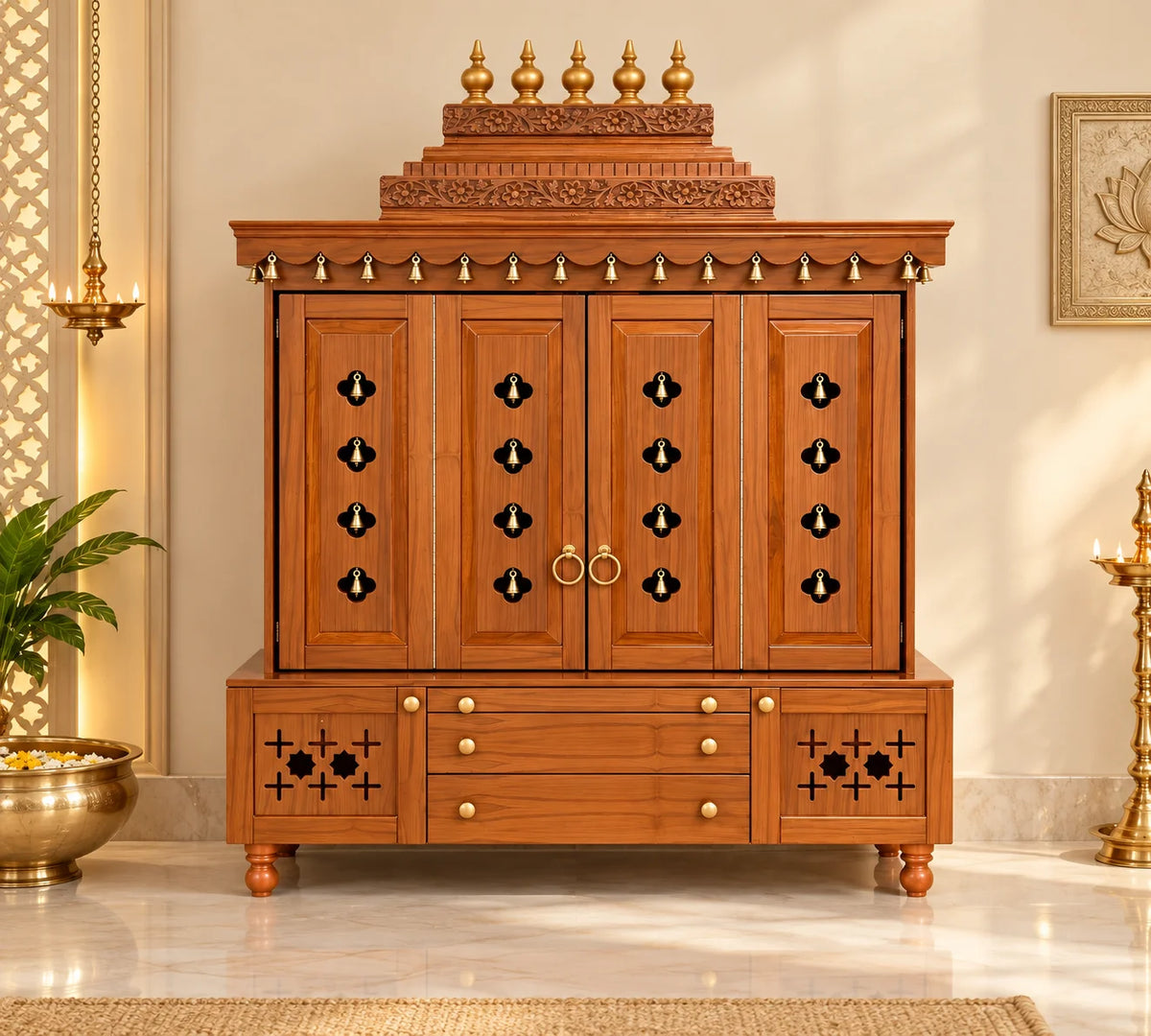
If you want a practical setup, place the mandir in the northeast and keep the area neat with limited storage around it. The design should fit the available space without looking too heavy. A wooden pooja mandir works well here because it brings a warm and steady look while still matching vastu needs. This makes the northeast the strongest option for mandir direction in home. It also supports daily prayer comfort.
East Direction – Suitable Alternative for Daily Worship
If the northeast is not available, the east direction is the next strong option. The east is linked with the rising sun and is often preferred for morning prayer. This makes it a useful and vastu-friendly direction for homes where layout limits the available corners. Many families use the east side for pooja room as per vastu when a northeast zone is not possible. East also works well for pooja mandir vastu placement in urban homes.
If the mandir is placed in the east, arrange the idols so the person praying can face east or north. This helps the prayer setup remain aligned with common vastu advice. The east direction also works well for wall-mounted units in a hall, passage, or living area where space must be used carefully. This keeps pooja room vastu easy to follow. It also supports pooja mandir vastu placement in open layouts.
For this placement, a compact wooden mandir with simple storage is usually enough. A design with proper shelf depth and a clean front keeps the area easy to manage. This is useful in apartments where the prayer corner has to stay practical. East is therefore a strong alternative for temple direction in home and supports regular daily use. It also keeps temple direction in home suitable for compact urban layouts.
North Direction – Practical and Vastu-Friendly Option
The north direction is also considered a good option for a pooja mandir. It may not be the first choice in every case, but it is still accepted in many vastu-based layouts. When planned well, the north side can support a calm prayer area and give enough space for a neat setup. For many compact homes, this becomes a practical answer for home temple vastu. North is another safe choice for pooja mandir vastu placement.
If the mandir is placed in the north, keep the area around it open and organised. Avoid unnecessary storage below or around the unit. Soft lighting and a clean backdrop help the prayer area feel more focused. The mandir should look settled in the room and should not get lost among other household items. This also keeps pooja room as per vastu more practical.
The north side is often suitable for floor-rested mandirs that need a little more height and storage. A well-made wooden mandir with drawers can hold pooja items while still keeping the space orderly. This makes north a useful option for pooja direction as per vastu when the main ideal zones are not available in the required form. It also supports mandir direction in home for compact layouts.
Directions to Avoid for Pooja Mandir Vastu Placement
South Direction and Southwest Zone
Most vastu guidance suggests avoiding the south direction for a pooja mandir when better options are available. This side is usually not preferred for prayer because it does not support the same light and spiritual feel as the northeast, east, or north. For this reason, pooja mandir vastu placement in the south is generally treated as a last option rather than a planned choice. It is rarely advised in pooja room vastu.
The southwest zone is also usually avoided for mandir placement. This part of the home is often seen as heavy and better suited for bedrooms or storage. A mandir kept here may not feel open or peaceful enough for regular prayer. This is one reason many guides on mandir placement according vastu advise families to choose a lighter area of the house. In most cases, mandir placement according vastu works better in a cleaner and more open zone.
Sometimes the layout of a home gives very limited choices. In that case, the setup should still be planned carefully. Keep the area clean, reduce visual clutter, and try to maintain proper idol position. These steps do not replace ideal direction, but they help keep the prayer area more respectful and usable. Even then, northeast, east, or north remain better choices whenever possible. That helps pooja mandir vastu placement stay more balanced. Care in this stage improves pooja mandir vastu placement later as well.
Near Bathrooms, Staircases, and Bedrooms
A pooja mandir should not be placed against a bathroom wall if it can be avoided. It should also not be kept under a staircase. These areas often feel cramped, active, or unsuitable for a prayer corner. A mandir should stay in a space that allows focus and maintains a sense of cleanliness. This is a basic rule in pooja room vastu and is repeated across many vastu guides. It is also part of practical placement.
Bedrooms are also not the first choice for a mandir. Prayer and rest serve different purposes in the home, so they are better kept separate where possible. If no other space is available, place the mandir away from the bed and keep the unit covered when it is not in use. This helps create a clearer distinction between personal rest space and prayer space. This keeps the prayer setup more respectful. This also supports home temple vastu.
Modern homes often need compact solutions. In such cases, a wooden mandir with doors can help maintain separation. The doors help keep the prayer unit neat and visually distinct from the rest of the room. This can be useful in a bedroom or mixed-use area where privacy and order are both important.
Idol Placement and Orientation Rules in Pooja Mandir
Idol placement is an important part of the prayer area. The idols should be arranged in a clean, balanced, and respectful way. The position should support comfortable prayer without forcing awkward movement or crowding. Proper idol arrangement also supports pooja mandir vastu placement because direction and daily use must work together. This is a core part of pooja room vastu. Careful idol placement helps pooja mandir vastu placement feel natural in daily use.
A common question is which direction should God face in the mandir. In many home layouts, idols are arranged so the devotee can face east or north while praying. The exact setup may depend on wall position and room shape, but the arrangement should feel stable and should not force awkward movement. The goal is a prayer posture that feels natural and respectful each day. This also helps mandir direction in home stay clear.
Another common question is which direction a person should face while praying. East is usually preferred for daily worship, while north is also commonly accepted in many homes. This is why the idol arrangement and the room direction should be planned together instead of as separate decisions. When both are considered at the same time, the mandir becomes easier to use and more aligned with daily routine. This is useful for pooja room as per vastu and pooja direction as per vastu.
For families who use the pooja area every day, small design choices also matter. The prayer shelf should be at a height. It should have storage for agarbatti, diya, matchbox, prayer books and cloth that's easy to reach. This storage should not be too close to the idols. A clean and simple layout helps us stay focused. Keeps the space peaceful even when our home is busy. This is one more reason pooja mandir vastu placement should be planned early.
Do not keep broken idols, damaged items, or unused pooja objects inside the mandir. The space should remain clean and intentional. A wooden mandir with shelves can help us keep our idols, lamps and daily prayer things organized. This keeps the area tidy and easy to take care of.
Vastu Guidelines for Pooja Room Design and Layout
Size and Proportion of the Pooja Area
The pooja area should match the size of the home. It should not be too small for our prayers but it does not need to be too big either. Even a quiet corner can work well when it is properly planned. The main goal of pooja room as per vastu is not a large room. It is a dedicated and well-kept space. Good balance also depends on this planning. This is what keeps pooja room as per vastu practical in daily life.
The design should stay simple. Avoid very dark colours, heavy decoration, or too many display items. Light shades and natural finishes usually make the area feel calmer. Wooden mandirs work well in such settings because they look steady and natural without becoming too loud in the room.
Many families prefer solid wood mandirs for long-term use. They usually feel stronger, remain stable with regular handling, and fit well in both traditional and modern homes. A good mandir should not only match the direction. It should also suit the room size and support everyday use without adding clutter.
Lighting and Ventilation
Light is very important for a prayer setup. We usually like natural light, especially when it comes from the east or north. If we do not have natural light then soft artificial light can also be nice. The goal is to keep our idols visible and the space calm without light.
We also need to think about ventilation. The smoke from incense and diya should not stay in a place that can make a trap for the smoke. A ventilated prayer area feels fresh and comfortable to use. Open carvings, side cutwork, or breathable panel design can help the space feel lighter and more practical for regular prayer.
Wall-mounted mandirs are useful in homes with limited space. They help save floor area and can still support proper alignment when placed in the right direction. Many of these designs also include small shelves or light provisions, which makes them practical for modern homes while still supporting home temple vastu. They also keep the prayer corner simple in compact rooms.
Why Wooden Pooja Mandirs Are Vastu-Friendly
Many people like wooden pooja mandirs because they give a natural feel to the prayer area. They work well in modern homes and match with other furniture. A wooden pooja mandir also looks warm and steady which is what most families want in a prayer space. That calm look supports pooja room vastu in daily use.
Another advantage is practicality. Wooden mandirs are available in wall-mounted, floor-rested, and storage-based designs, so they suit many home layouts. This helps families choose a mandir that fits the right direction as well as the available space. In that way, wood supports both design flexibility and pooja mandir vastu placement. It also helps correct direction feel easier to apply.
Wooden mandirs also allow better detailing in shelves, doors, drawers, and idol compartments. This helps keep lamps, incense, and daily pooja items arranged in one place. A neat setup supports regular prayer and helps avoid clutter, which is an important part of pooja room vastu. This also supports daily order over time.
Choosing the Right Pooja Mandir for Pooja Mandir Vastu Placement
When we choose a mandir we should think about the room where it will go and how often we will use it. A big home might be okay with a mandir that sits on the floor. A small apartment might need one that mounts on the wall. The right size depends on the space we have and our daily prayer needs. The design should support pooja mandir vastu placement from the start.
When setting up a mandir you need to think about the height, the depth, the storage and how easy it is to clean. The mandir should not be too deep for a small room and it should not be in the way. A simple mandir with storage for the basic pooja items is usually the best choice. This helps the mandir stay clean and easy to use each day. It also helps pooja room vastu stay easy to maintain. Good sizing also supports pooja mandir vastu placement.
For many families, the best setup is not the biggest mandir. It is the one that fits the room well and supports regular use without strain. A prayer unit that is easy to clean, easy to access, and placed in the right zone will usually work better than a large unit kept in the wrong place. This practical approach helps the mandir remain part of daily life instead of becoming difficult to maintain. It supports correct planning in a realistic way.
When families explore wooden pooja mandir collections, they should look for a design that supports direction, room size, and daily function. A good mandir should feel balanced in the room and should not force repeated changes in setup. This is important for both comfort and long-term vastu fit. This also keeps pooja mandir vastu placement practical for modern homes.
Common Vastu Mistakes to Avoid in Pooja Mandir Placement
One thing people do wrong is they put the mandir close to the television, a big storage unit or something else that is distracting. It is harder to pray when there is noise or things moving around you. The mandir should stay in a part of the room that feels quieter and more settled. This can weaken pooja mandir vastu placement if ignored.
Another thing people do wrong is they put many idols or decorative things in the mandir. The area where you pray should look clean and simple and respectful. If you have many things in the mandir it can feel crowded and hard to take care of. Keeping only the required items helps support a better routine and a more peaceful setup. This supports pooja room vastu and better daily balance.
It is also better not to keep the mandir under beams, loft storage, or low overhead structures. Such placement can make the space feel compressed. Choosing the right mandir size for the room can prevent these problems and help the unit fit the layout in a more natural way.
Maintaining the Pooja Mandir for Long-Term Vastu Balance
Regular cleaning is important for keeping the mandir suitable for daily prayer. You should get rid of dust, broken things, old boxes and things you do not use. A clean mandir is more respectful. It is also easier to take care of. This is one of the simplest ways to support pooja room vastu every day. It also helps pooja room as per vastu stay practical.
The lights in the mandir should be checked from time to time. If a lamp or the thing that holds it or the wire is broken you should replace it so it is safe and comfortable. If you take care of things, the area where you pray will stay calm and you can use it without any problems.
A good wooden mandir does not require very difficult upkeep. You do not need to do much to keep the mandir looking nice. Just dust it gently and polish it a little. Take basic care of it. If you choose a mandir and take care of it then it will be good for daily use and it will also be good for the home temple vastu balance. This care also supports pooja mandir vastu placement. Regular care helps pooja mandir vastu placement stay dependable for years.
It is also helpful to review the room after installation. Make sure the doors of the mandir open easily, you can put the diya in a place and the area where you pray does not get damp or smoky. To use the mandir in the long run it will be more comfortable to make small alterations. When the mandir is plain and simple to maintain, there is a higher possibility of people using it on a daily basis and maintaining it clean and significant. That is good for pooja room vastu and calm daily use. It also supports pooja direction as per vastu.
FAQs on Pooja Mandir Placement and Vastu
What is the best direction for pooja mandir vastu placement at home?
The northeast is usually considered the best direction for a pooja mandir. If that is not possible, east or north can also work well. The prayer setup should allow a calm and clean area for regular worship. This is the most common answer for mandir direction in home.
Can a pooja mandir be placed in the living room?
Yes. A pooja mandir may be located in the living room on a direction facing right and the place should remain clean, serene, and not surrounded by heavy daily traffic. A quiet spot in the northeast, east or north side is generally more preferred. This setup can still support pooja room vastu in a practical home layout.
Is wooden mandir good as per vastu?
Yes. The wooden mandir is a good option since wood provides a natural, stable and minimalistic appearance in the prayer hall. It is also applicable in numerous forms of homes and it makes the home quite cozy, tidy and simple to keep clean. That is why many families prefer wood for home temple vastu.
Can a pooja mandir face south?
It is usually better to avoid south placement when another option is available. Northeast is the first choice in most homes, while east and north are also commonly preferred for pooja room vastu. Choosing one of these directions usually gives better support for pooja mandir vastu placement.
Is having a wall-mounted pooja mandir approved by vastu?
Yes. A wall mounted pooja mandir would be useful provided it is placed in the correct direction, at a convenient height and in a clean place. It is a viable choice of flats and small houses with limited floor space. With proper planning of the layout, it can also support pooja room as per vastu.
Can a pooja mandir be kept in the bedroom?
It is better to avoid bedroom placement when another room or corner is available. If there is no other option, keep the mandir away from the bed, keep the area clean, and use doors or a cover when it is not in use. This can still support pooja room as per vastu in compact homes.
How many idols should be kept in the pooja mandir at home?
It is usually better to keep only a limited number of idols so the space does not feel crowded. The arrangement should stay clean, respectful, and easy to maintain. This also supports pooja mandir vastu placement.
The right pooja mandir placement helps families create a prayer space that feels calm, practical and respectful. When you follow vastu rules and choose a mandir that suits the home layout the mandir area becomes easier to maintain and more comfortable for daily worship at the mandir. A balanced setup supports tradition while still fitting modern life. It also strengthens pooja mandir vastu placement and home temple vastu for the long term. A well-planned unit also keeps the room easy to use every day.
Tricky corner or small room?
Send a photo. We will suggest a placement, size and orientation that suits your home.