
Journal · mandir for home
How to Arrange Pooja Mandir in Your Home
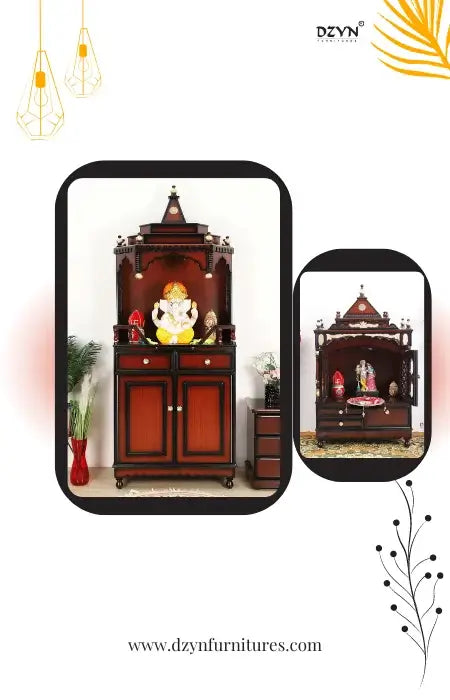
Installing a Pooja Mandir in your home is an important and spiritual undertaking and you need to plan it carefully to create a peaceful and holy place. This sacred place, dedicated to worship and meditation, must follow the ancient guidelines to make the most of its positive energy and spiritual benefits.
A well-situated pooja mandir not only contributes to the home's spiritual ambiance but also delivers wealth, serenity, and divine favors. Following the guidelines is very necessary no matter whether you are setting up a small mandir or a dedicated pooja room. In this article, we will go deep into the detailed steps and tips for arranging your pooja mandir so that it can become a haven of divine energies.

Here, we will go over all the important details of setting up a pooja mandir, including the best direction and positioning, and also some Vastu advice to improve the overall spiritual atmosphere of your house.
The Right Mandir Direction In Home Is Northeast
The northeast direction is the best direction to place a pooja mandir at home. This direction is often referred to as the Ishan corner and is ruled by a divine force that promotes enlightenment and spiritual growth. By placing your temple in the northeast direction, you can increase the inflow of positive energy and create an environment of peace and prosperity.
Make sure that the structure of your worship temple is not on the ground. Place it on a raised platform or stand as a mark of reverence for the divine. Also, to maintain a calm and focused environment in worship, keep the space clean and free of clutter.
If the northeast direction is not possible, you can consider the north or the east direction. Because these directions are connected with the rising sun it represents a fresh start and a positive energy. These directions are beneficial for spiritual practice.
Idols’ Mandir Direction In Home Plays A Crucial Role Too
The spiritual energy of your pooja mandir is greatly affected by the direction in which the idols or deities are arranged. It is advised that the idols be oriented toward the east or west. This arrangement enables the worshipper to face either north or east during their prayers, which is said to be quite advantageous.
Make sure the idols are at a comfortable height for you; when you sit, this should ideally be at the level of your heart. This arrangement not only improves the focus of the eyes during prayers, but it also represents a sincere relationship with God. To allow energy to freely flow around the idols, keep a small space between them and the wall rather than placing them too near.
Pooja Unit’s Doors And Windows Must Open In The North Or East Direction
Your pooja unit's doors and windows should open toward the north or east for the best energy flow and uplifting vibrations. Because of this configuration, the mandir receives early morning sunshine, which is full of spiritual energy and creates a heavenly and inspiring atmosphere.
When creating the pooja unit, think about using translucent materials like glass for the windows and doors. This facilitates the free passage of light and energy while also improving the aesthetic appeal. Furthermore, make certain that the doors open easily and without hindrance, representing the unimpeded route to heavenly gifts.
The Ground Floor Is The Best For Placing The Mandir In A Home
Many ancient and Vastu principles hold that the most ideal spot for a pooja mandir is the ground floor while some believe that setting it up on any other floor will be offensive to God. This does not mean a mandir on an upper floor has no value; it only means that such practice has not been favored by most communities of people living under Hinduism over many centuries.

The mandir should not be placed in a basement or on high ground as this can interfere with the flow of positive energy. Located on the ground floor, the mandir is in tune with the earth’s kinetic energy, creating a dense and luminous atmosphere.
Always Place Diyas And Agni Kund In The Southeast Direction
Including fire elements in your pooja mandir setup, like diyas and agni kund, is a potent technique to call in divine energy and cleanse the area. Agni, the fire element, governs the southeast direction, which is the best orientation for these things.
The fire element is balanced and harmonized in the space when diyas and agni kund are positioned toward the southeast. This location not only strengthens the mandir's spiritual energy but also represents the illumination of knowledge and the destruction of evil forces.
Make Sure You Face North Or East While Praying
It is usual to face either north or east when praying, as this is thought to harmonize the worshipper with benevolent spiritual energy. Turning to face east is associated with the rising sun, the source of life, and enlightenment, while turning to face north represents a connection with the polar star and divine stability.
Make sure you can comfortably face these directions during prayers in your pooja mandir setup. By practicing this, you can strengthen the spiritual advantages of your worship and develop a closer relationship with God.
You Can Decorate The Mandir With Religious Books And Other Auspicious Items
Your pooja mandir will reflect your great dedication and spirituality if you fill it with religious books and uplifting objects. Add sacred texts such as the Ramayana and the Bhagavad Gita, which are central to Hinduism.
You can decorate your mandir with bells, incense burners, and holy conch shells (shankh), in addition to religious texts. These objects enhance the space's spiritual aura in addition to being aesthetically pleasing and contributing to customs and rituals.
Choose Soothing/Light Colours For Your Mandir In Home
Your pooja mandir's colour scheme is very important in establishing a calm and peaceful atmosphere. Select soothing, light colours such as white, light yellow or pastel shades, which evoke a sense of cleanliness and inner peace.
To avoid creating an overpowering or distracting atmosphere, stay away from utilizing bright or dark hues. The natural light is reflected and enhanced by light colours, adding to the mandir's overall serene and uplifted atmosphere.
Some Vastu Tips For Your Mandir In Home
To further enhance the spiritual energy and harmony of your pooja mandir, consider the following Vastu tips:
- Avoid placing the mandir under a staircase: It is recommended to avoid placing your pooja mandir under a staircase, because staircases are believed to cause energy to flow out.
- Do not place the mandir near the bathroom or toilet: these areas are considered impure and can disturb the sanctity of the mandir.
- South: The south direction is connected with the fire element and it is considered as the most intense energy zone. It is generally not recommended to place a Pooja Mandir in the south direction.
Keep reading
More from the journal
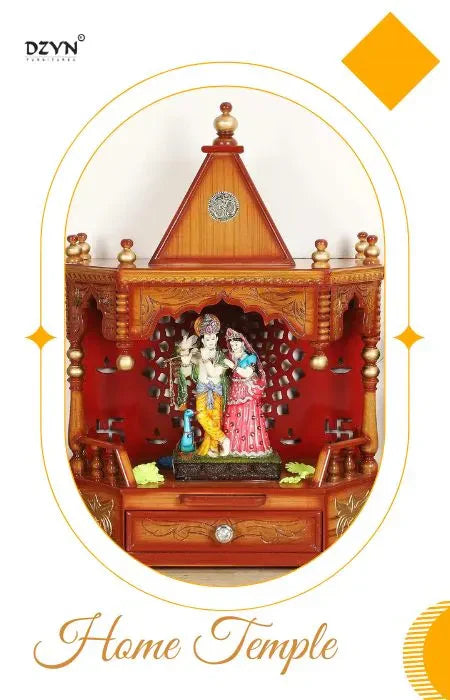
Top 10 Trending Home Temple Design Ideas
A home temple is known to be the inner soul of any house. Globalization has brought...

The Several Advantages of Having a Wooden Pooja Mandir in Your House
A pooja mandir made of wood is not just another piece of furniture; it is a...

Top Wooden Temple Designs for Home
There are lots of designs to explore while selecting a wooden temple for home. Depending on...
Choosing your first mandir?
Tell us about your home and we will help you pick the size, design and finish.