



















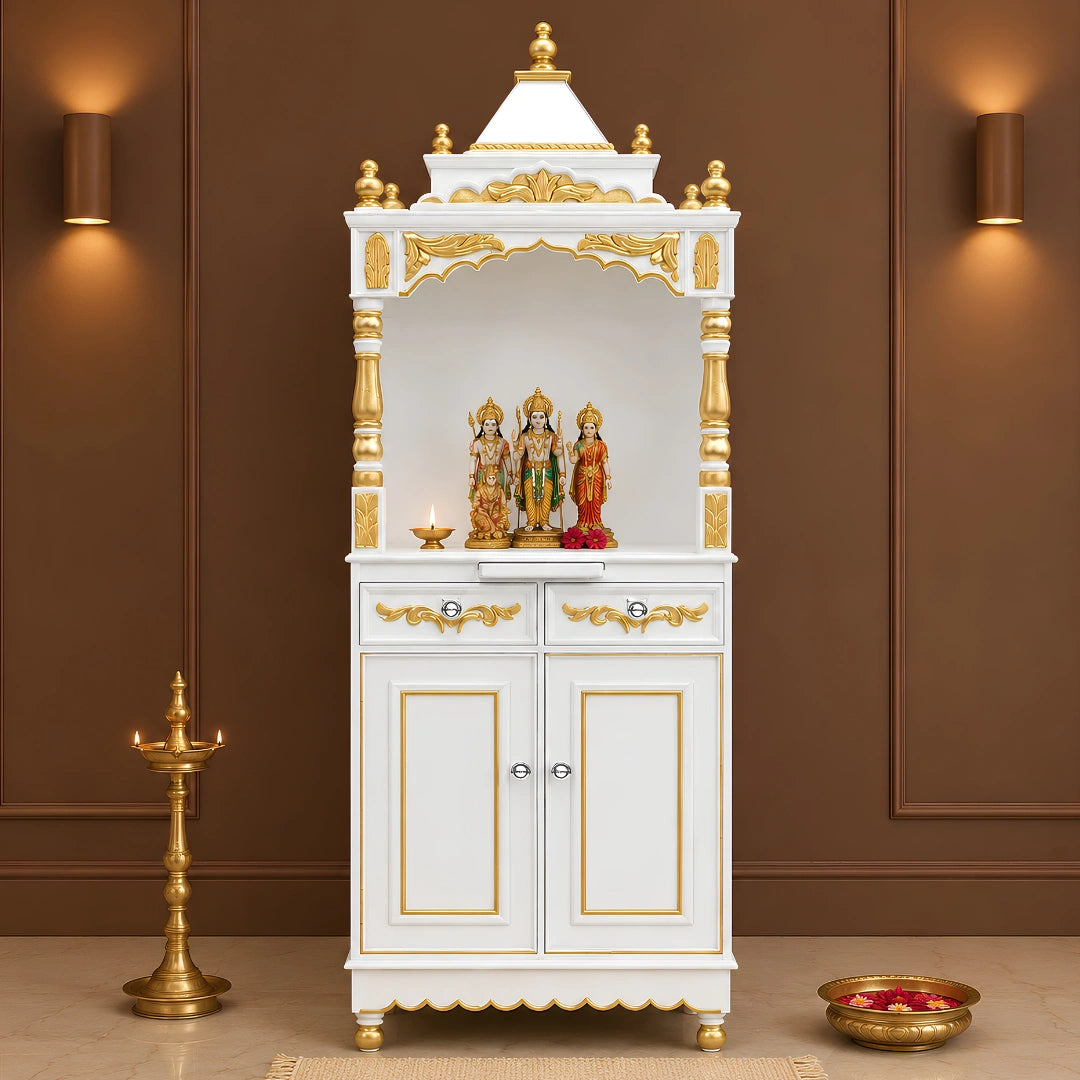

Shop by type
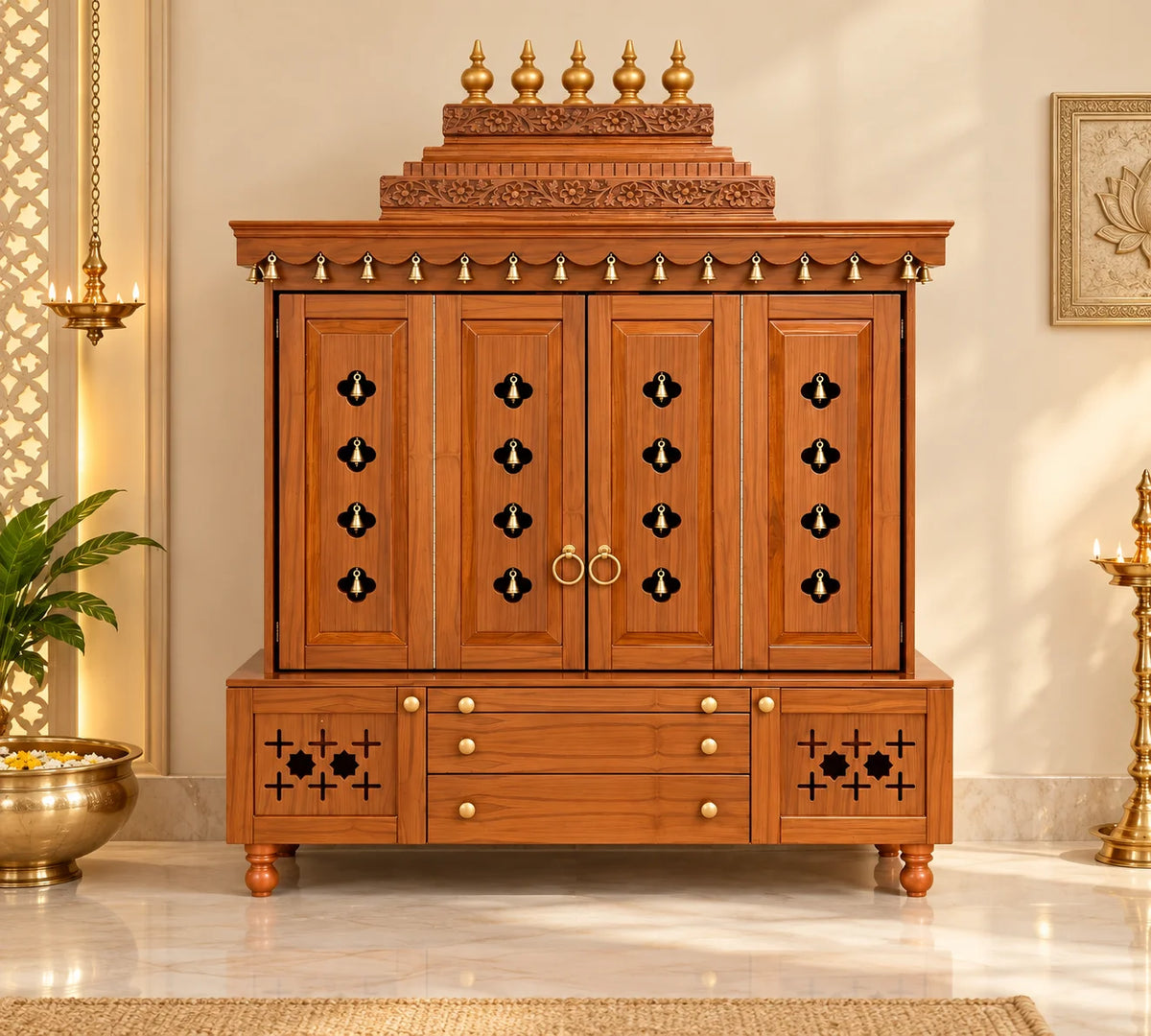
Pick the mandir type that fits your space.
Floor-rested, wall-hanging or a full mandap; with storage or doors; for a flat, an office or a pooja room — start from where it will sit.
By placement
Where will it stand?
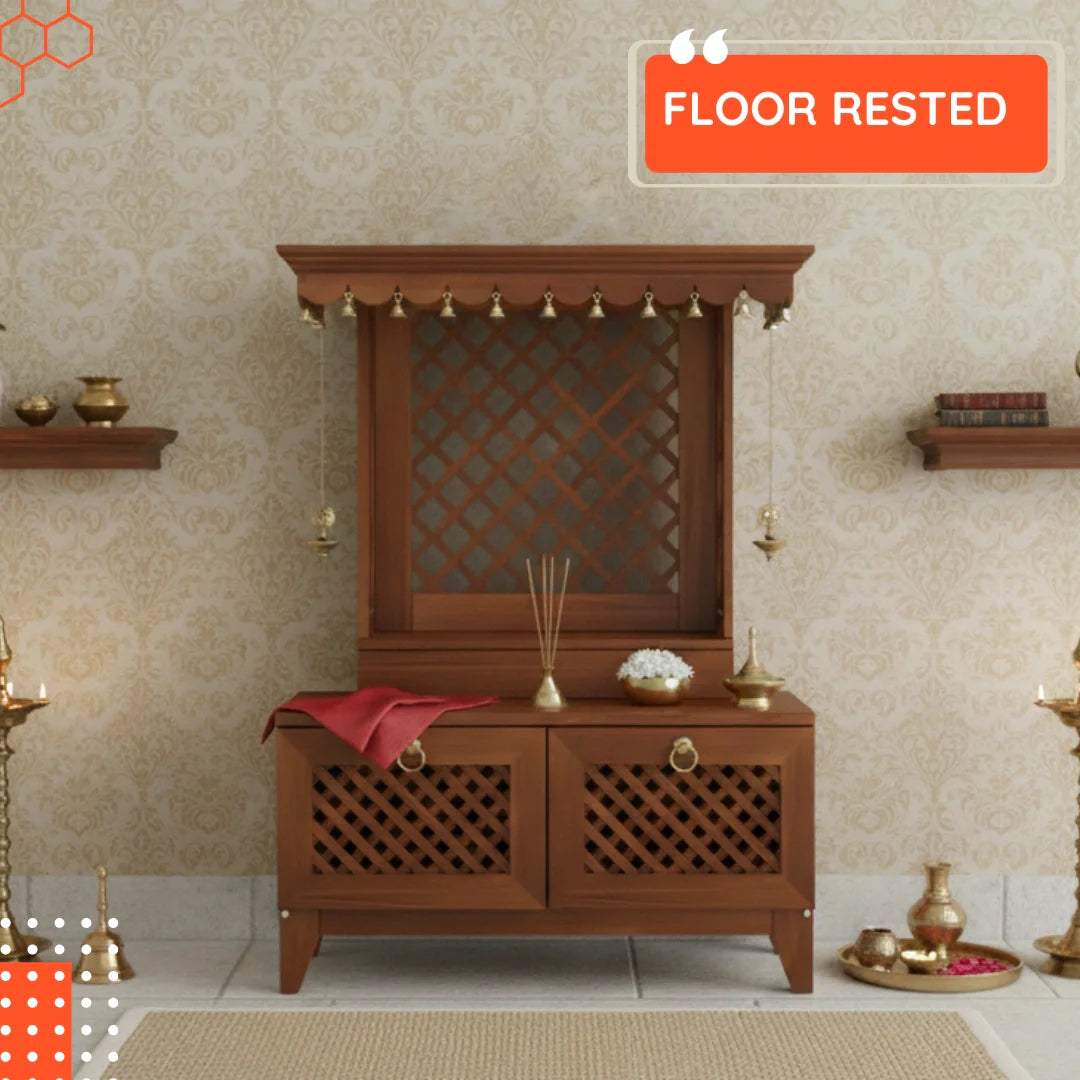
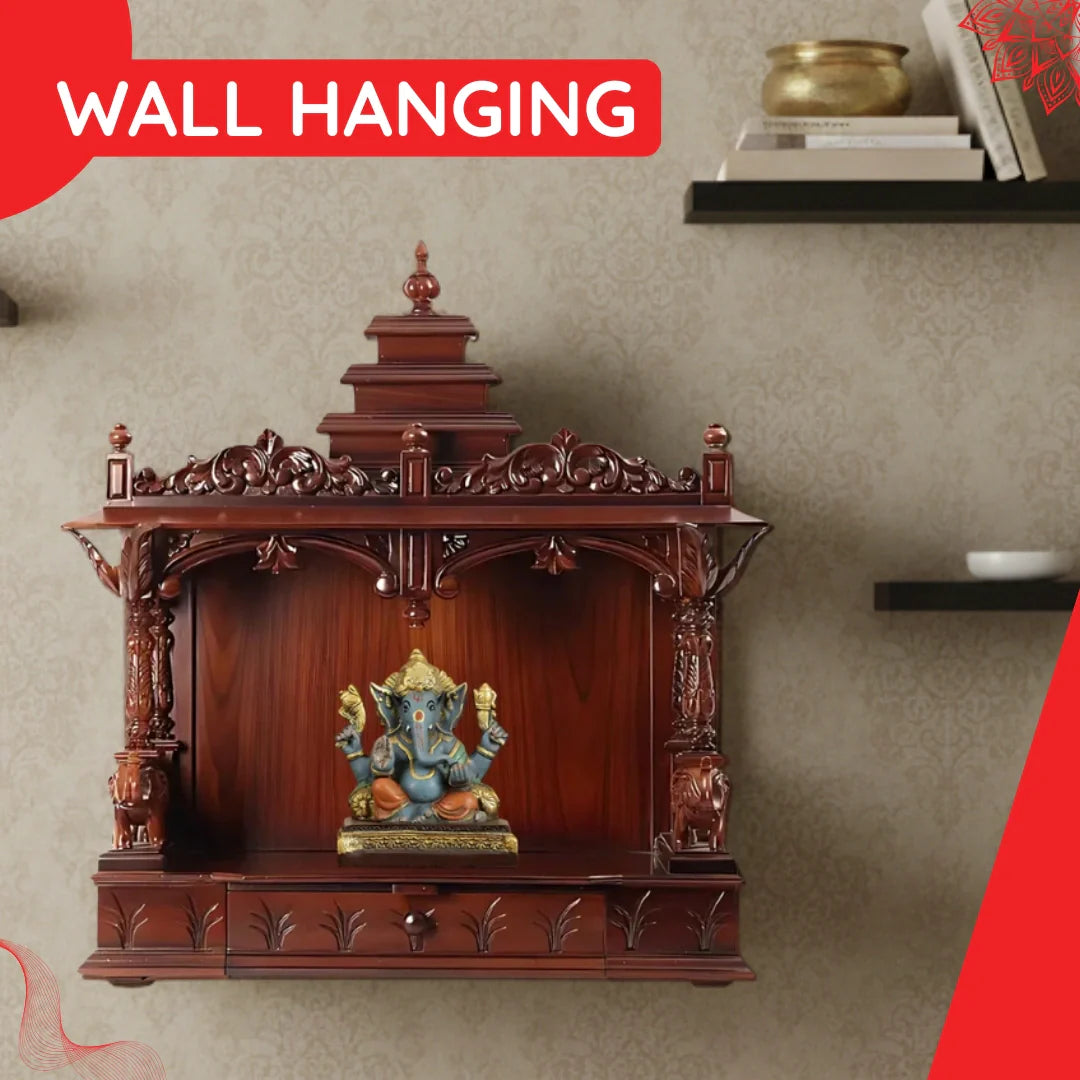
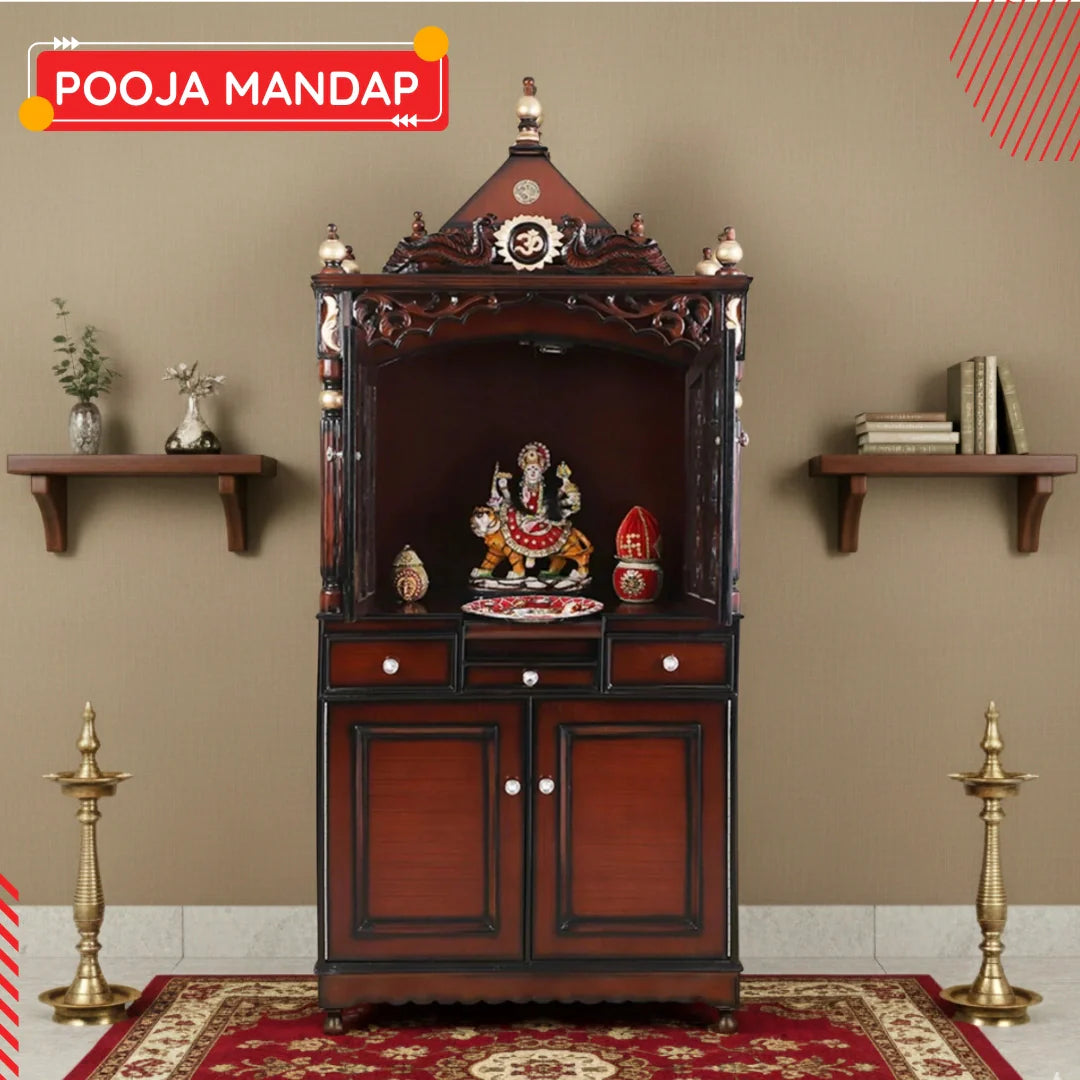
The first decision: on the floor, on the wall, or as a full shrine.

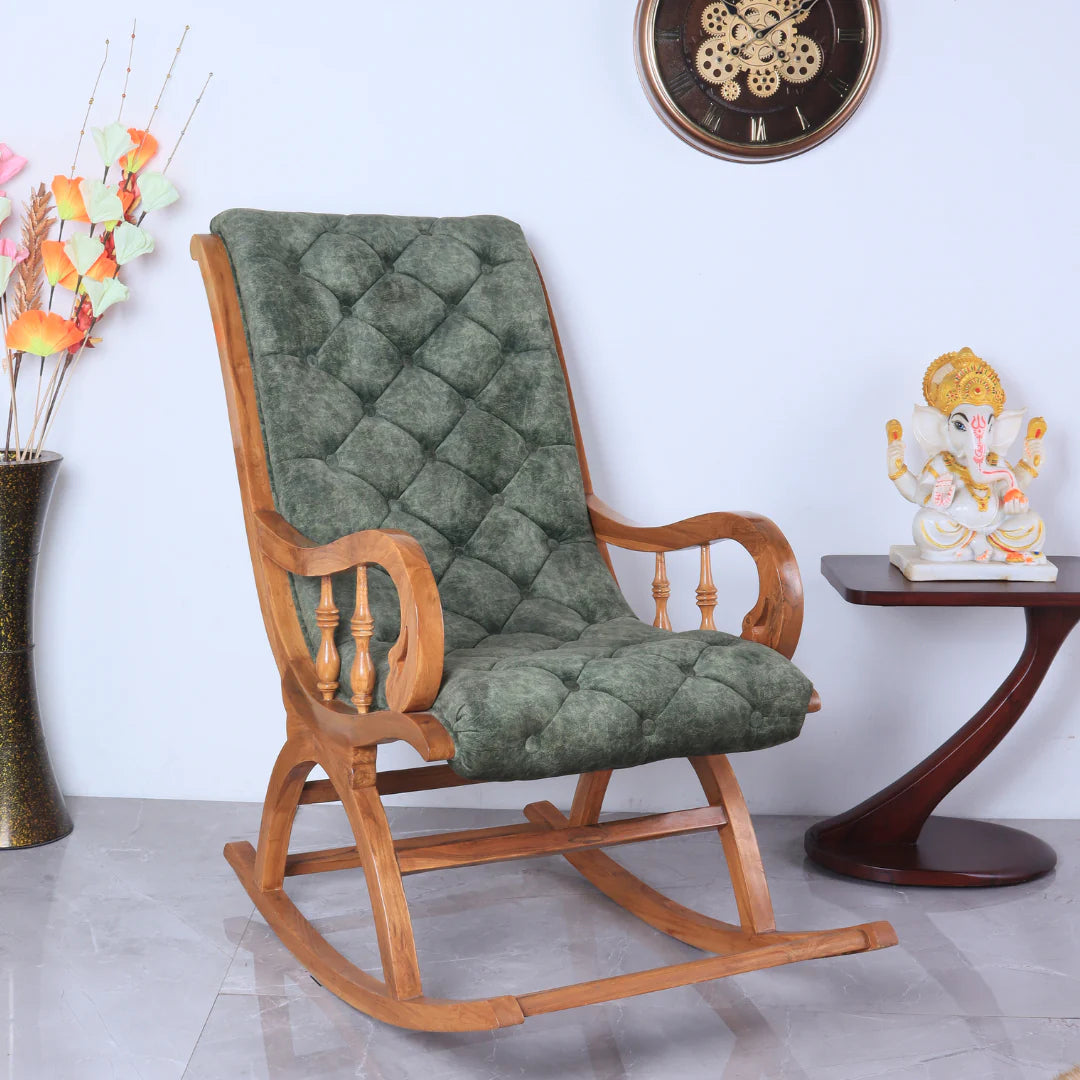
By function
What should it hold?
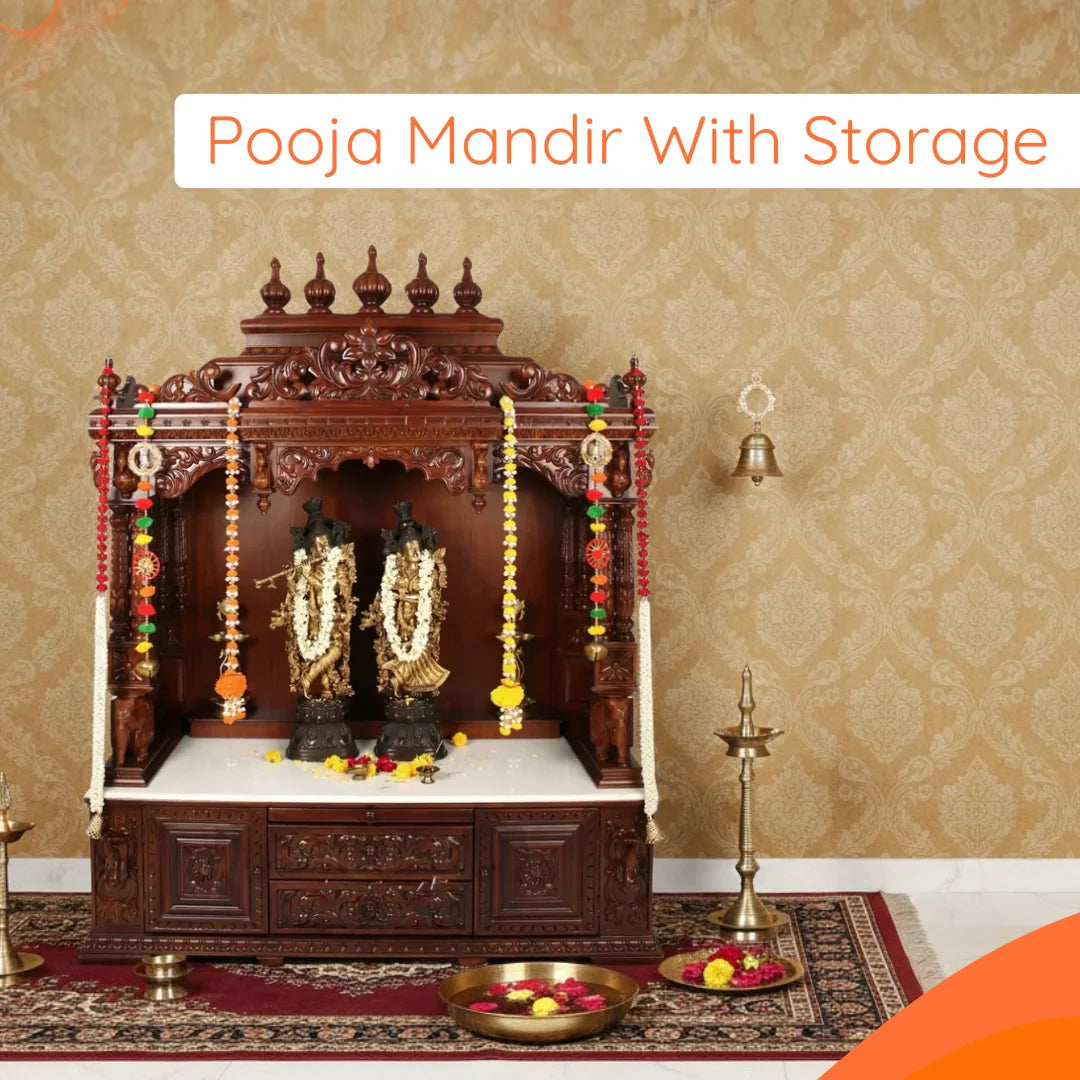
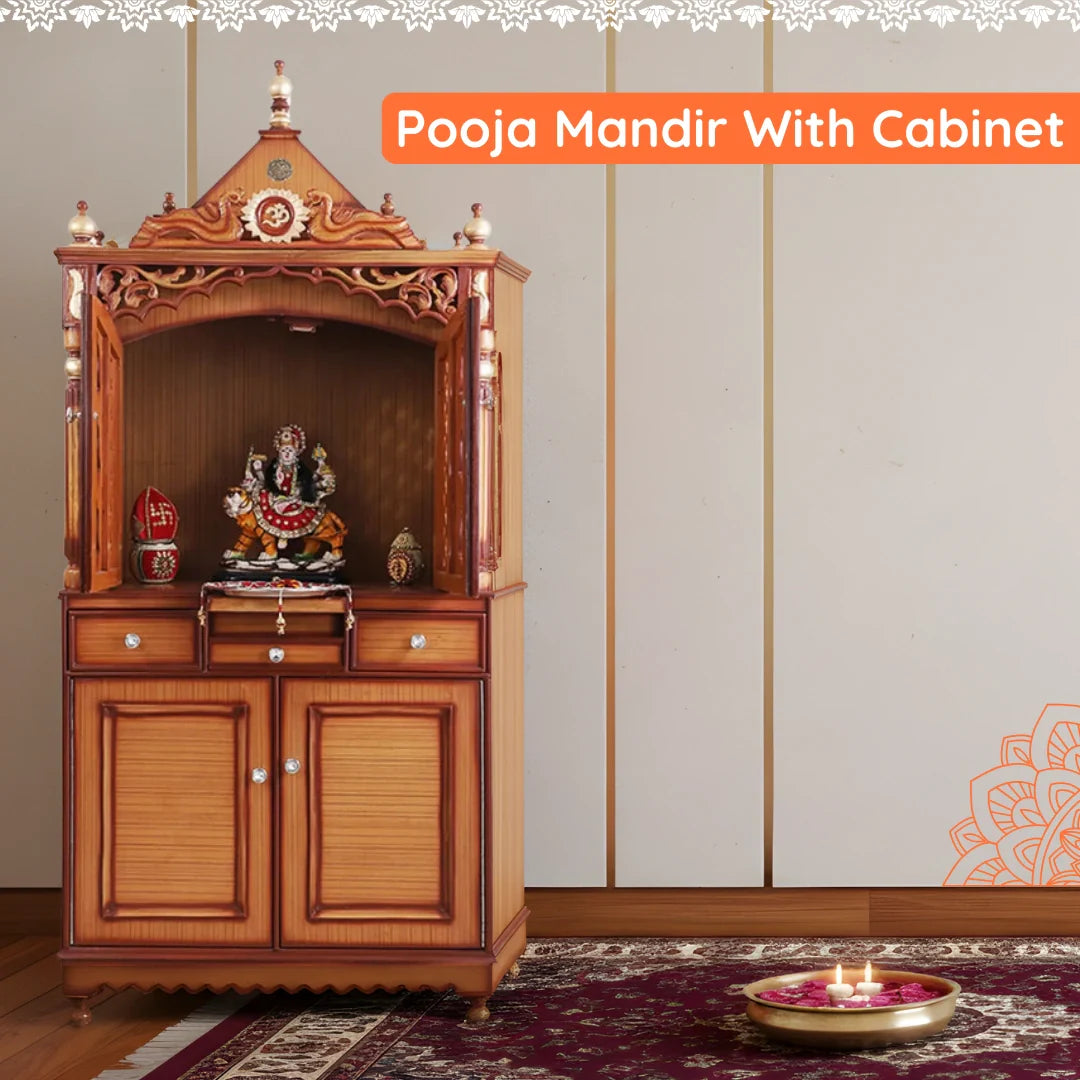
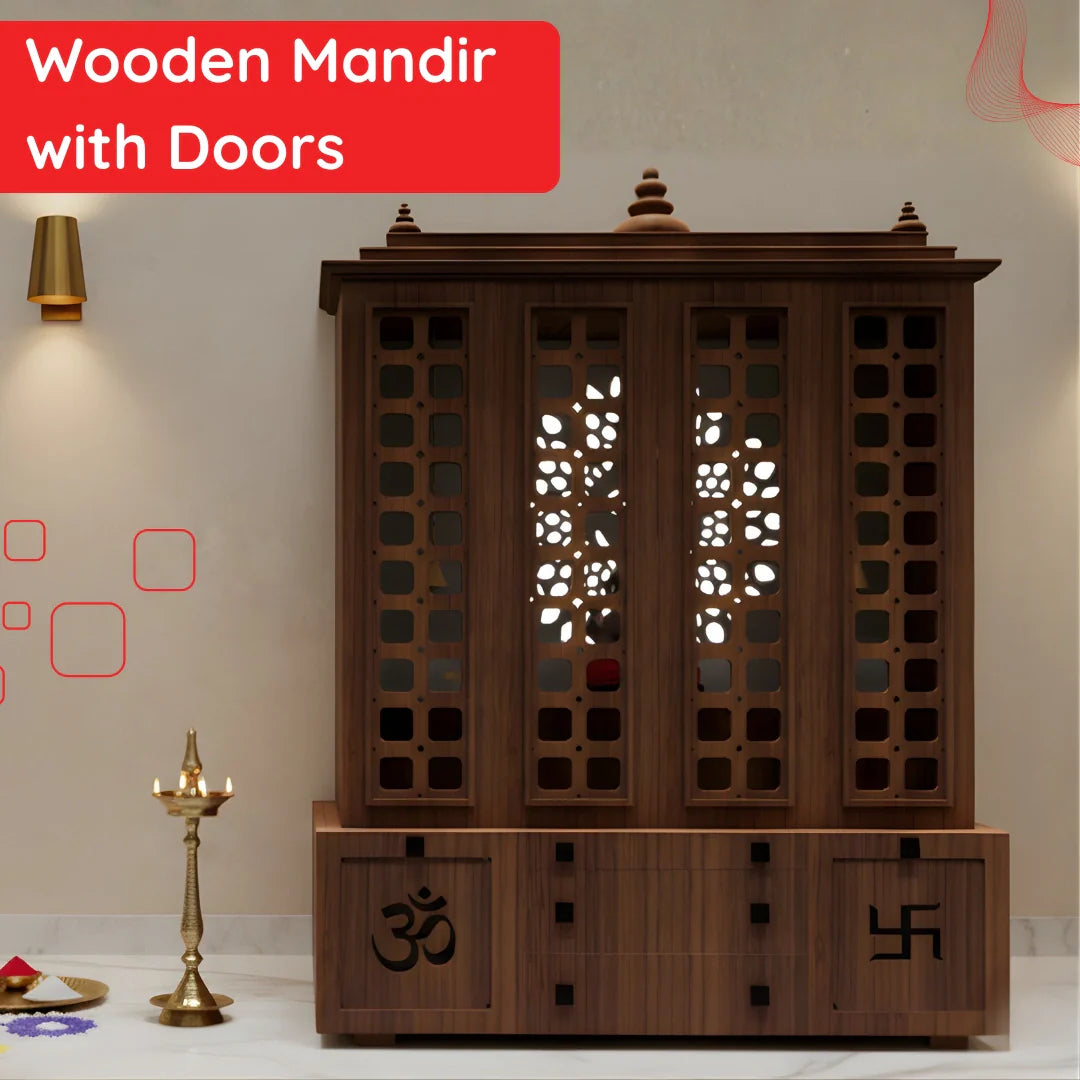
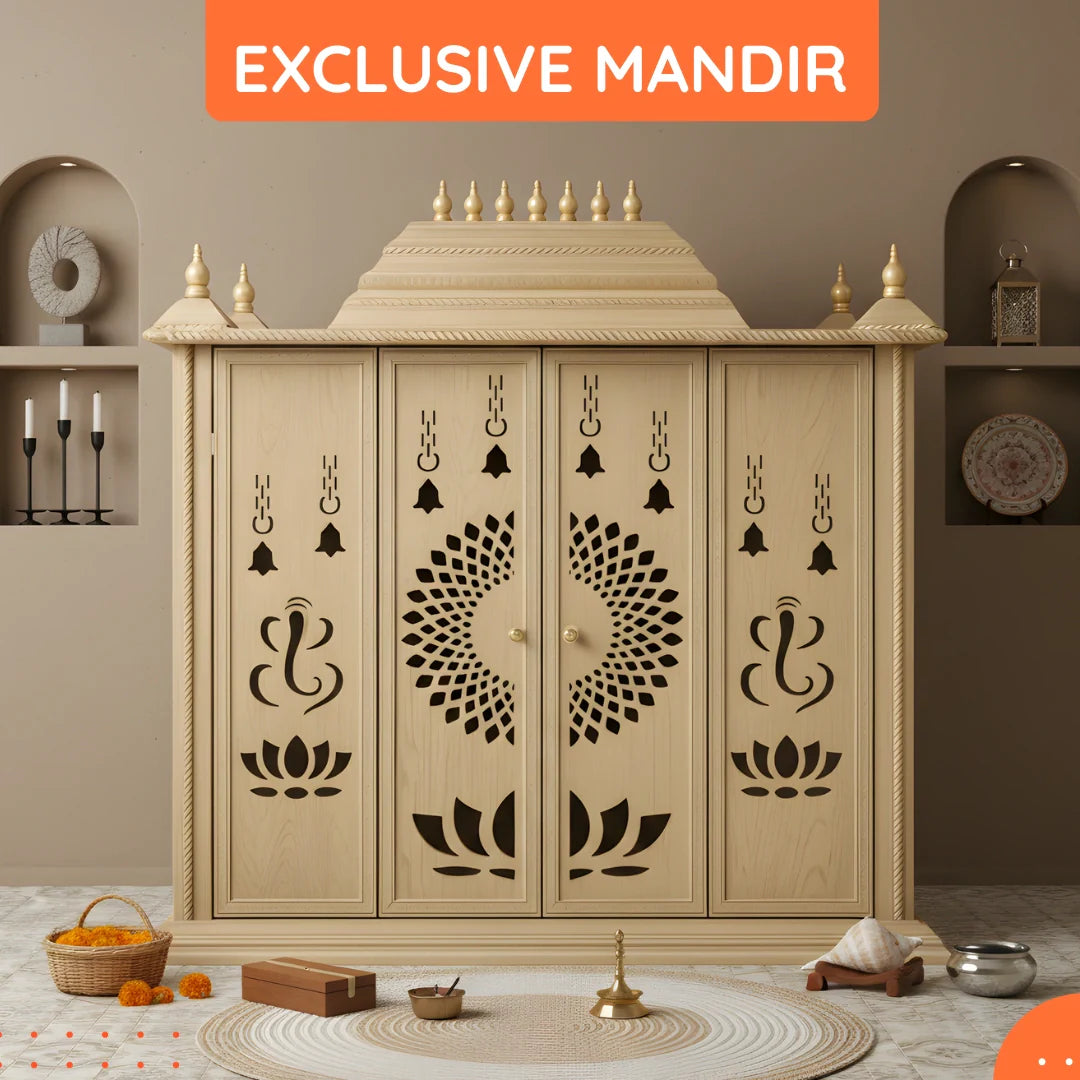
Storage, cabinets and doors change how the mandir lives with you every day.
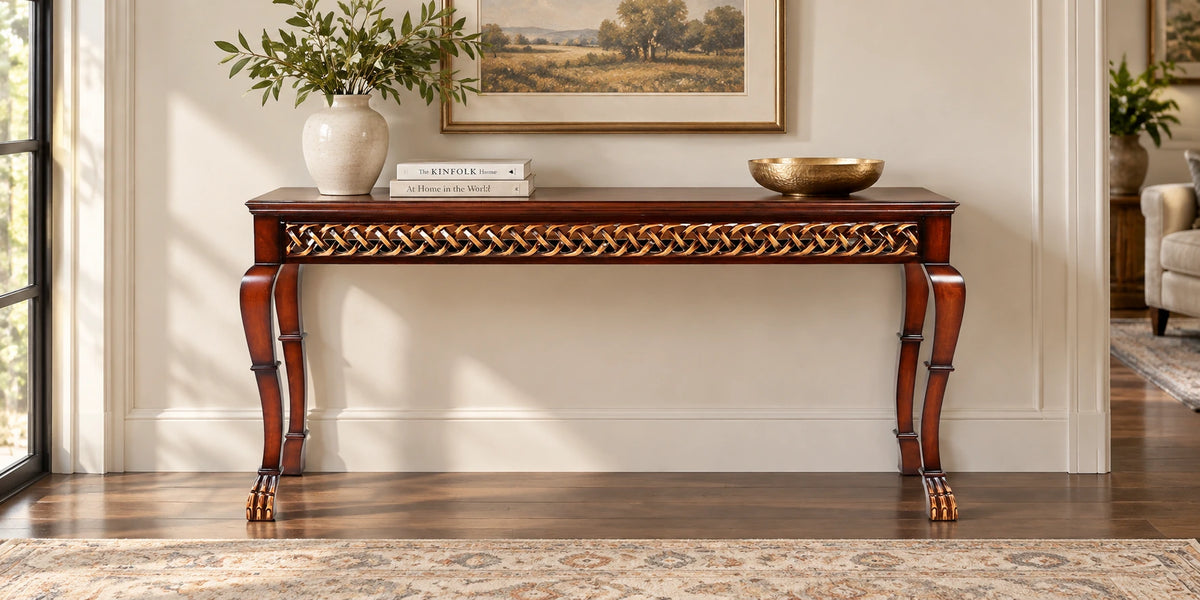
By space
Where do you live and work?
Designs sized and styled for the rooms our customers actually have.
By height
3, 4, 5 or 6 feet
If you already know your wall, shop straight by height.
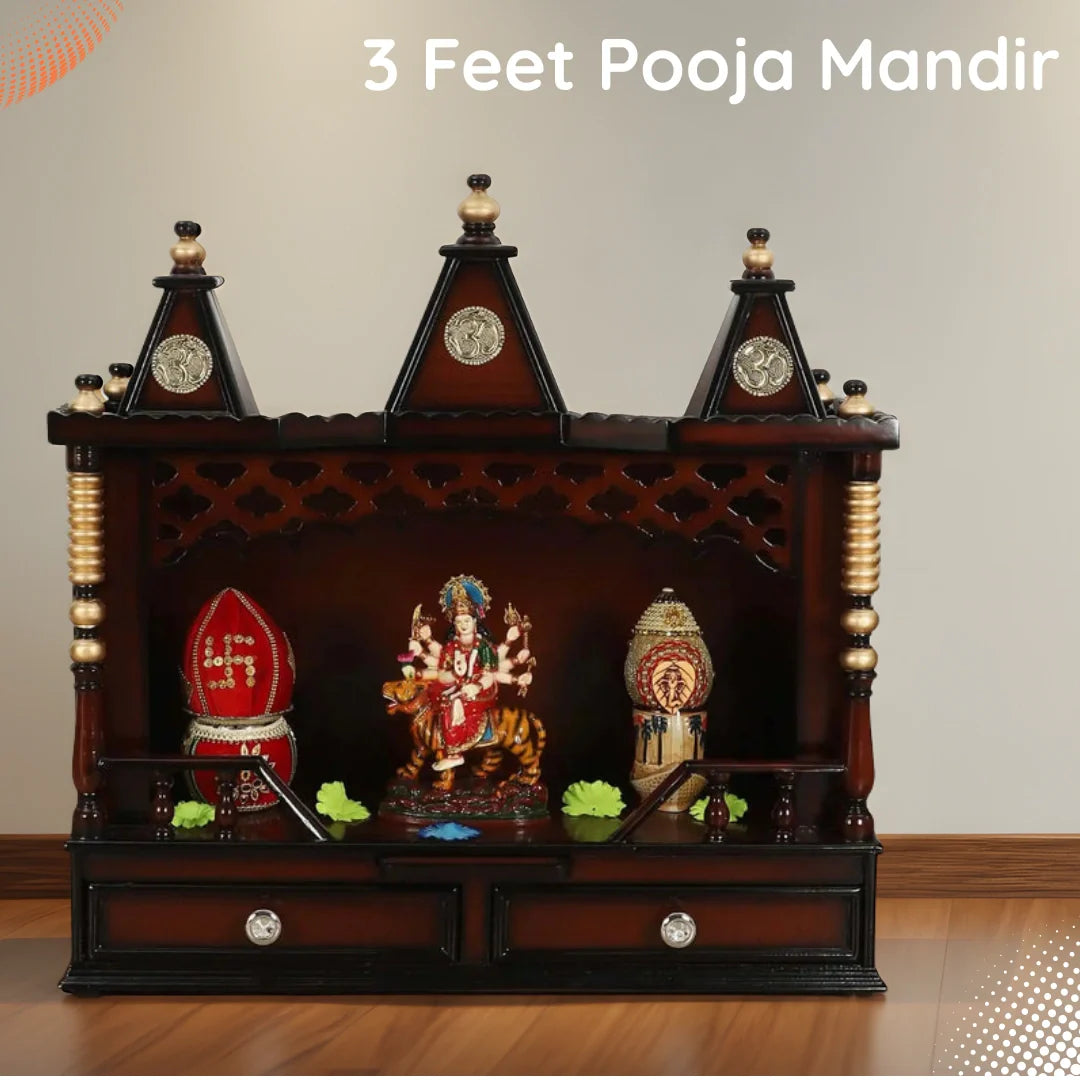
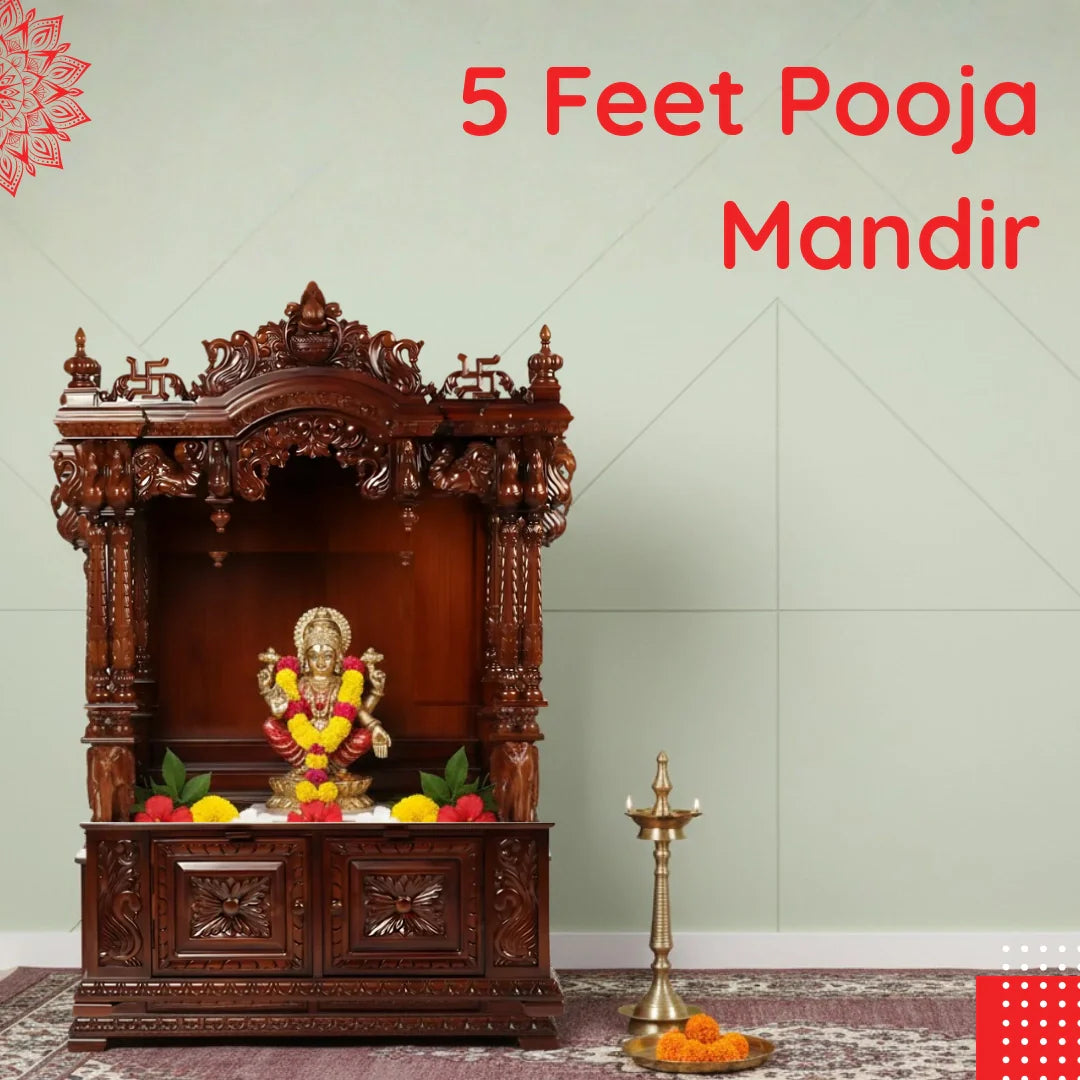
Which type is right?
The types, compared
| Type | Typical height | Space needed | Best for |
|---|---|---|---|
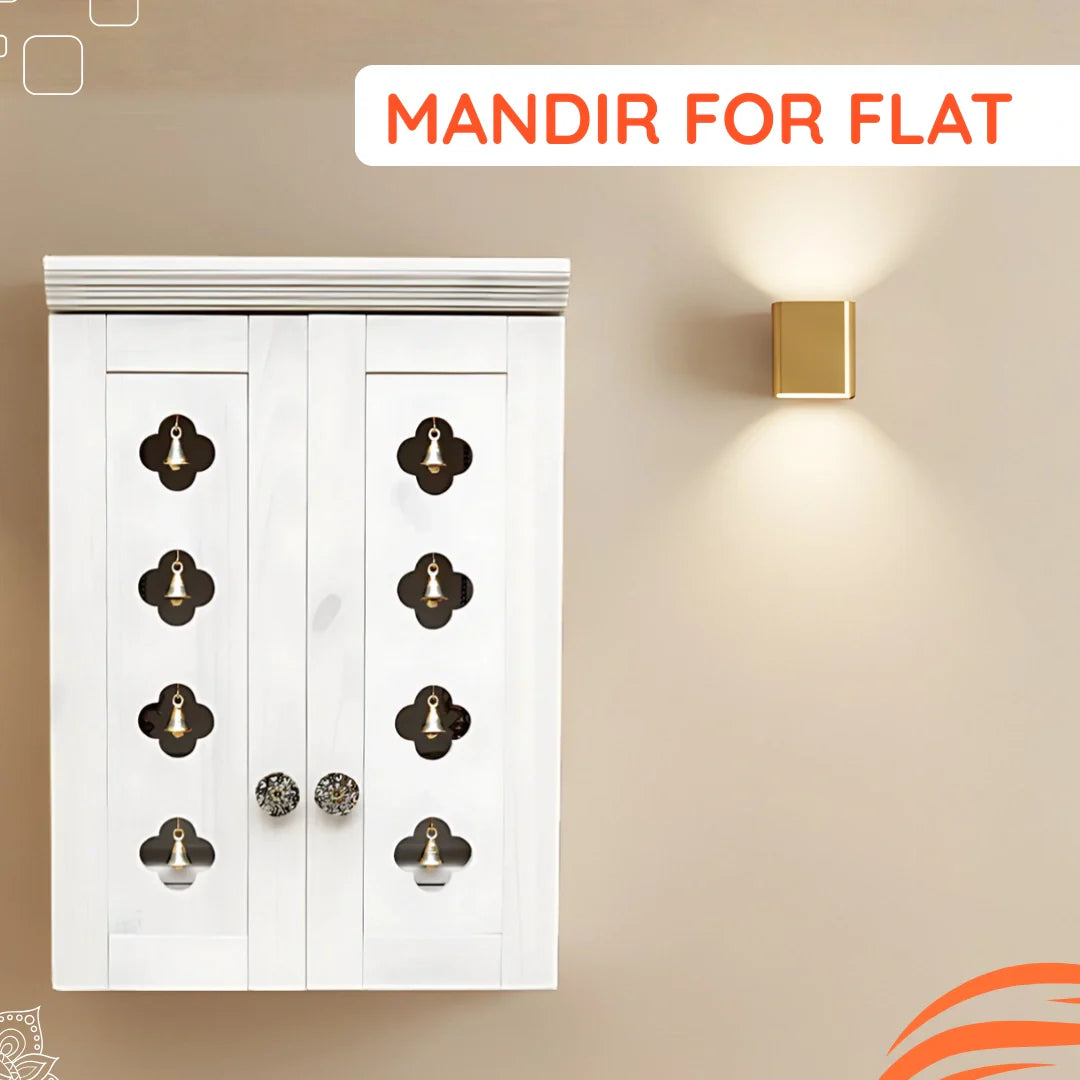
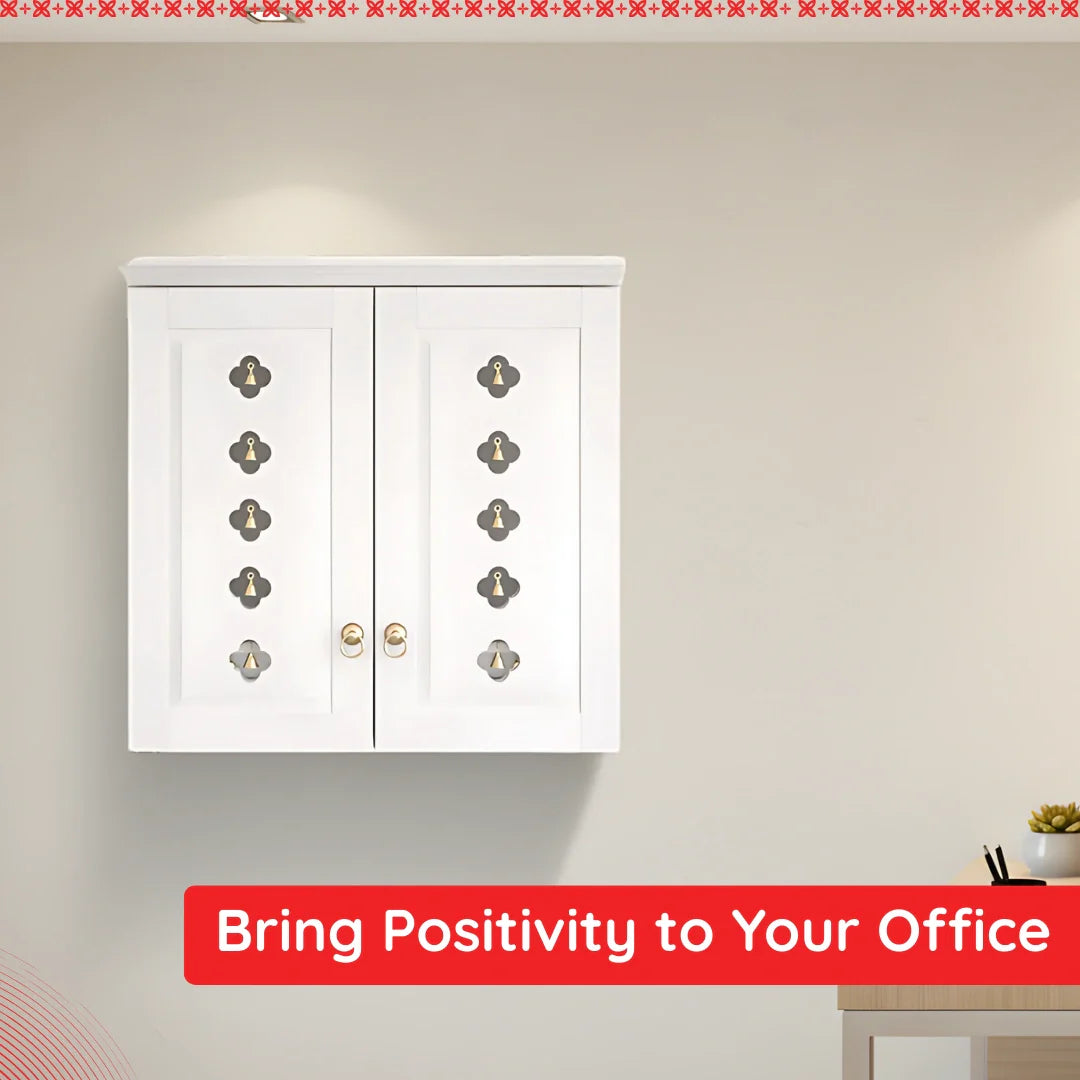
| Wall-hanging | Up to 3 ft | A free wall, no floor space | Flats, hallways, offices |
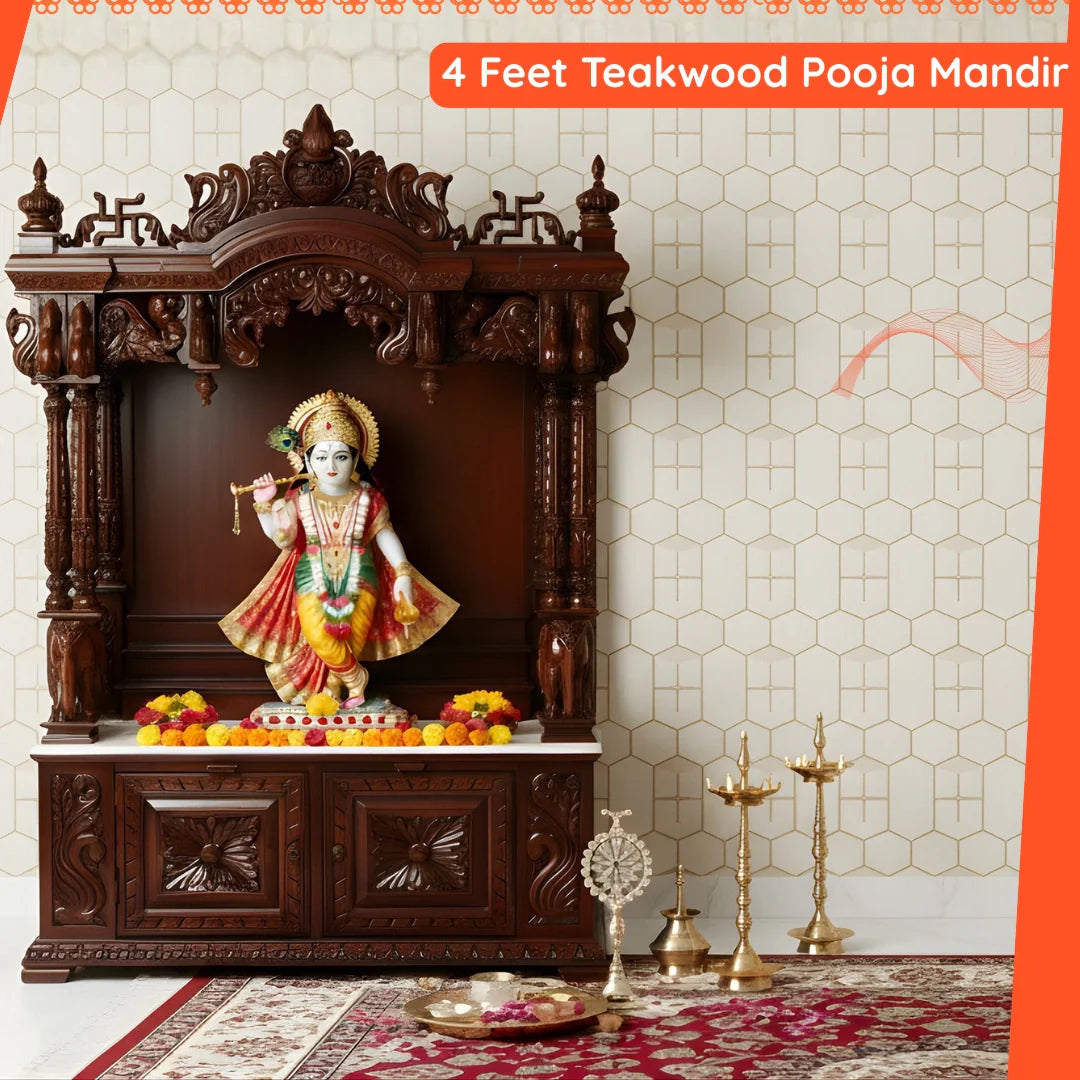
| Floor-rested | Around 4 ft | A corner, about 2–3 ft wide | Living-room pooja corners |
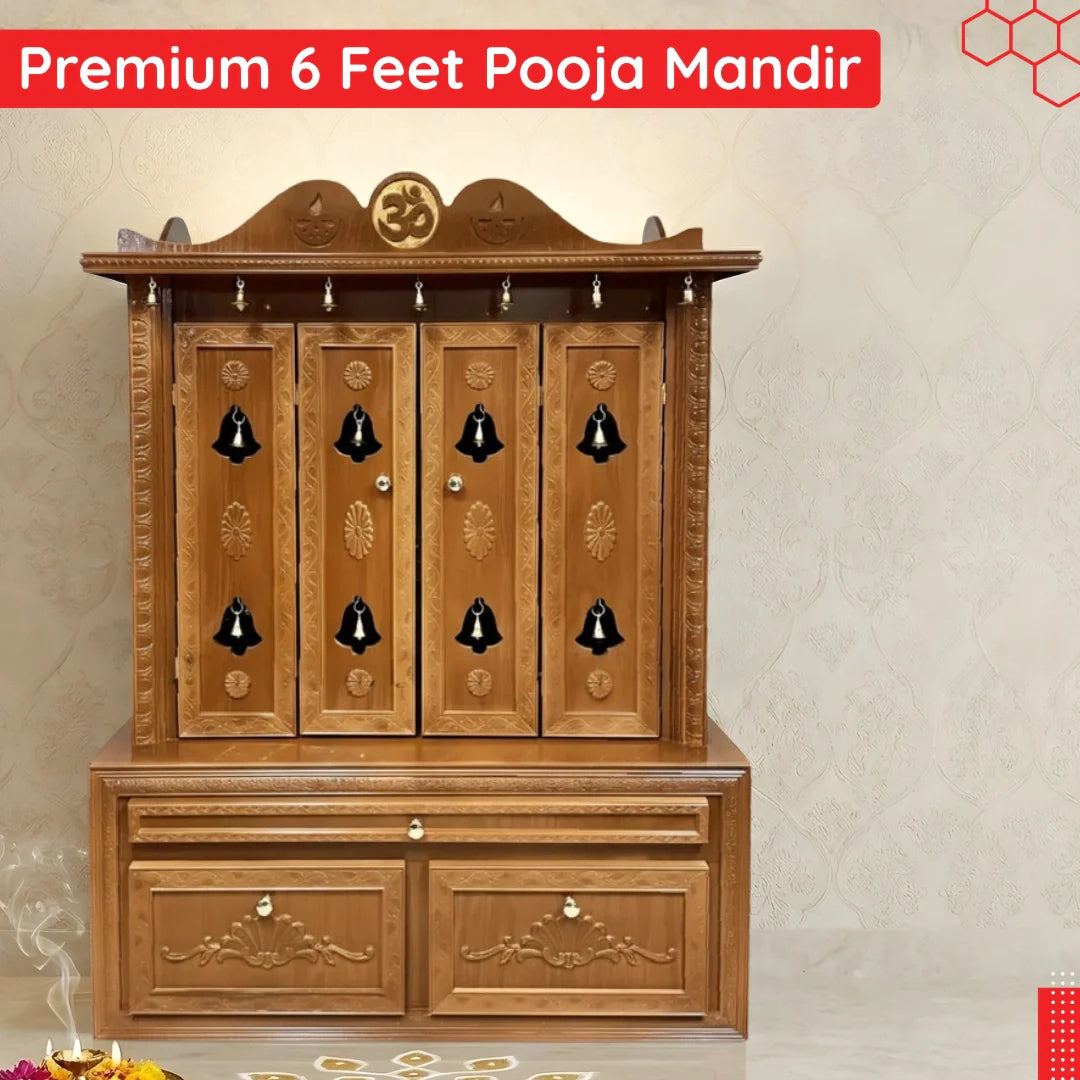
| With storage / cabinet | 4–6 ft | A corner or wall, 2–4 ft wide | Keeping samagri tidy |
| Pooja mandap | 5–6 ft | A dedicated room or wide wall | Pooja rooms, joint families |
What's the difference between floor-rested and a mandap?
A floor-rested mandir is a standalone temple around 4 ft tall; a mandap is a larger, pillared shrine — often 5–6 ft with a raised sanctum and doors.
Is a wall-hanging mandir safe?
Yes, when fixed into solid brick or concrete with the right anchors. Our installation guide walks you through it, and we can advise for drywall.
Which type is best for a rented home?
A floor-rested mandir — no drilling, and it moves with you to your next home.
Can I get a type in a custom size?
Yes. Every mandir is made to order, so we can tailor the height, width and depth to your space.
Tell us your space
Share your wall or corner size and we will recommend the right type and size.