

















Choosing wood
How to select the right wood for your mandir.
Not all wood is equal — and a mandir is meant to last. Here is what to look for, and the questions to ask before you buy.

Why the wood matters more for a mandir
A mandir is used every day in a way no other furniture is: oil lamps and heat, water from abhishek and flowers, the weight of brass idols, and years of opening and closing doors.
The wrong material swells, chips or discolours within a few years. The right one — a dense, oil-rich solid wood — keeps its carving crisp and its finish warm for generations.
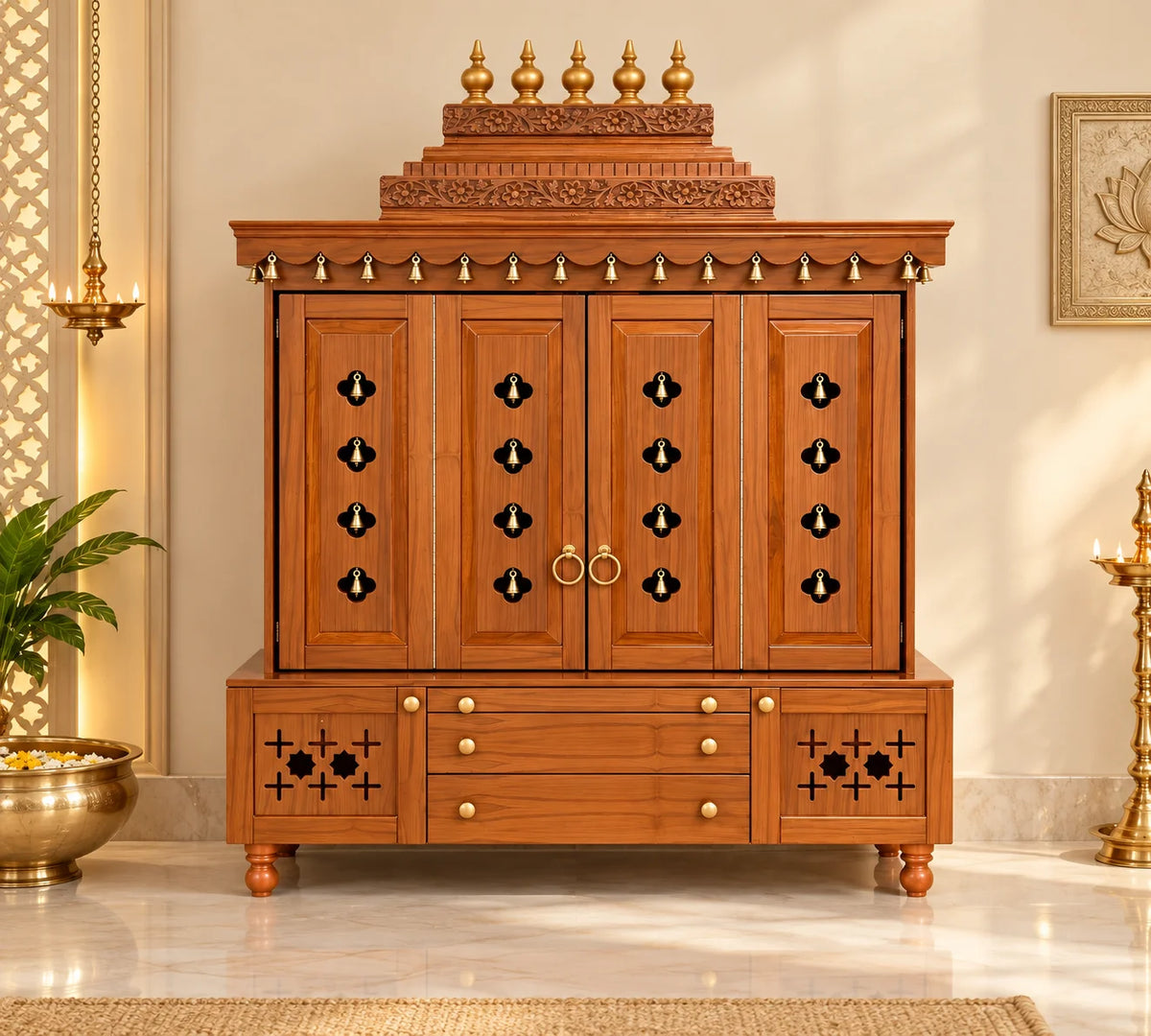
That's why we build every DZYN mandir in teakwood: solid teak and teak ply, as listed on each product.
Mandir materials compared
Teak, sheesham, board, marble or acrylic?
Solid wood is a single, natural timber throughout — the only choice for an heirloom mandir. Veneer is a thin wood layer glued over cheaper board; it can look similar but chips and lifts over time. Engineered board (MDF, particle board) is made of compressed fibres and does not survive water, weight or years of worship.
| Material | Near lamps & water | Lifespan | Carving | Verdict |
|---|---|---|---|---|
| Solid teak | Excellent — natural oils | Generations | Crisp, lasting detail | Best choice |
| Solid sheesham | Good with care | Decades | Good, can chip | Good budget wood |
| MDF / particle board | Poor — swells with water | A few years | Printed or shallow | Avoid for a mandir |
| Plywood with veneer | Edges lift and peel | 5–10 years | Surface only | Short-term only |
| Marble | Excellent | Generations | Limited, very heavy | Good, but heavy & costly to ship |
| Acrylic / glass | Heat-sensitive | Scratches, yellows | None | Not recommended |
Before you pay
8 questions to ask any mandir maker
An honest maker answers every one of these without hesitation.
Which wood species is it?
Expect a clear answer — teak, sheesham — not 'wooden finish'.
Is it solid wood throughout?
Ask specifically about the back panel, base and shelves.
Is the timber seasoned?
Unseasoned wood warps and cracks in the first seasons.
How are the parts joined?
Traditional joinery lasts; nails, staples and cam-locks don't.
What finish is used?
It should be safe near lamps and easy to re-polish.
Can I see the raw wood?
A photo or video of unfinished wood shows what's underneath.
What's the warranty?
A confident maker stands behind the piece — we give 12 months.
How is it packed and shipped?
Crating and insurance protect carving on long journeys.
Wood by climate & room
The right wood for where you live
| Where you live | Best wood | Why |
|---|---|---|
| Humid & coastal — Mumbai, Chennai, Kolkata | Teak | Resists swelling and fungus in damp air |
| Dry North India — Delhi, Jaipur, Lucknow | Teak (or sheesham) | Teak won't crack in dry winters and heat |
| Kitchen corner | Teak, with doors | Handles steam and heat; doors keep smoke out |
| A secondary, dry room on a budget | Sheesham | A fair choice where humidity and use are low |
Mandir wood FAQs
Answered, plainly
Which wood is best for a pooja mandir?
Solid teak. Its natural oils, density and stability make it the safest wood near lamps and water, and it keeps carving crisp for generations.
Is sheesham good for a mandir?
It's a fair budget choice for a dry room, but it needs regular oiling and moves more with humidity than teak.
Is an MDF or plywood mandir okay?
For a piece used daily near lamps and water, we don't recommend it — board swells when wet, and veneer lifts and chips.
Is a wooden mandir good as per Vastu?
Yes — wood and marble are traditionally preferred for home temples, and teak is especially valued.
How can I tell if a mandir is solid wood online?
Ask for the species, a photo of the raw wood, and how the parts are joined. Check the weight in the listing — solid teak is heavy.
What wood does DZYN use?
Teakwood: solid teak and teak ply, as listed on each product.
In depth
The complete guide to mandir wood
Read the full guide
How to Select Mandir Wood: A Clear, Honest Guide for Choosing the Right Wood for Your Home Mandir
When someone plans a home mandir, the first line I usually hear is, “Bas mandir sundar dikhna chahiye.” And honestly, that feeling is correct. A mandir should look beautiful, calm, and pure because it becomes the most peaceful corner of the house. But if we stop only at looks, we often end up with a mandir that looks great for three months and starts giving problems after that. A mandir is not like a side table that you can replace easily; it becomes part of your daily routine and your family’s memories.
So let’s talk properly about how to select mandir wood in a way that makes sense for real life. We’ll keep it simple, practical, and straight. This topic is written in a way like we talk at home, it is not about fancy words but for correct decisions. When you finish reading this you will know what to look for, what to stay from and why teak wood is the best choice for a mandir when you want a mandir that stays strong, sacred, and beautiful for years.
Why Choosing the Right Wood for a Mandir Is Different From Regular Furniture
A mandir goes through a daily “test” that most furniture never faces. When you light diyas you also use incense. Keep flowers around. You make sure to wipe the surface a lot. Sometimes water or oil drops fall on it without you seeing them. The wood has to be strong to handle the heat from the diyas, the smoke from the incense, and the moisture from the flowers. If the wood is not good, it will start to swell, crack, and the polish will come off. Sometimes you will even get a smell from the wood after some time. The wood has to handle all these things without getting damaged. That is why the wood quality matters more here than in many other furniture items.
Another point people miss is the “feel” of the wood. A mandir is a spiritual space, so it should not feel hollow or temporary when you open the door or place idols inside. When the wood is strong and natural, the mandir feels grounded and calm. That calmness is not only emotion; it comes from real build quality. This is exactly why selecting the right wood is not a small decision—it is the main decision.
How to Select Mandir Wood: The 9 Checks You Must Do Before Buying
If you remember only one section of this entire blog, remember this one. These are the checks that reduce regret and increase satisfaction. They also help you compare products fairly without getting trapped by sales talk. I’ll explain each check in simple language, the way you would explain it to a family member who is about to buy a mandir.
1) Check the Core Material, Not Just the Outer Look
Many mandirs are sold with attractive finishes, but the inside is not what you think. Some have a good-looking outer layer and a weaker internal structure. Over time, the internal structure decides whether the mandir stays stable or starts wobbling, bending, or cracking. A reliable mandir should have strong wood in the core, not only on the visible surface. If a seller avoids answering the “core material” question, treat it as a warning sign.
You can also check by gently tapping different sections. Solid wood often feels firm and consistent, while mixed materials can sound hollow or uneven. This is not a perfect test, but it gives clues. The safest path is to buy from ranges that clearly mention material and focus on long-lasting woodwork. For example, DZYN Furnitures positions its mandir ranges around teakwood durability and long-term use, which aligns with what most families want for a home temple.
2) Ask If It’s Built for Daily Puja Conditions
Daily puja conditions mean heat, smoke, oil, and frequent cleaning. Not every wood handles this well. Some woods react strongly to humidity changes, and some materials absorb moisture easily. That is why you should never choose wood as if you are buying a display shelf. You are buying something that faces daily ritual conditions.
Ask a simple question: “Will this handle diya heat and regular wiping for years?” If the answer is vague, that’s not good enough. A mandir should be a stable, long-term piece, not a fragile decorative item. Teak wood is naturally better suited for such conditions because it is known for durability and resistance in furniture applications.
3) Prefer Solid Wood for Mandirs That You Want to Keep Long-Term
If you want to keep the mandir for a time, it is better to use solid wood rather than engineered wood. Solid wood is strong on its own. It can be fixed if it gets damaged. It also works well with screws and carvings. When you pick wood for your mandir, you are getting something that will last and feel really nice. Solid wood is a choice because it has a natural strength that you just do not get with other types of wood like engineered wood. The mandir made of teak wood will be stable for many years.
This matters especially for families who want the mandir to become part of the home’s identity. Over time, a good mandir becomes an heirloom-like piece, not just a product. That is also why many premium mandir ranges highlight durability and longevity as key benefits.
4) Look at Joinery and Thickness, Not Only Design
A mandir can look stunning online, but if the panels are thin and the joints are weak, it won’t age well. Thickness gives strength, and good joinery keeps the structure stable across seasons. If a mandir is too lightweight for its size, it often means thinner materials or shortcuts in construction. That is not what you want for a sacred space that you use daily.
Also pay attention to doors, hinges, and shelves. If the door alignment looks off or the shelves feel flexible, the structure is not strong enough. A mandir should feel steady when you place idols, lamps, and puja items inside. This is one of those practical details that makes a huge difference after six months of use.
5) Choose a Wood That Supports Carving and Traditional Details
Many people want traditional temple style: pillars, arches, bells, jaali patterns, and symbolic motifs. When you want detailed work, the wood needs to be good for carving so it does not break or chip. Some types of wood are just too fragile. They can break easily and try to carve them deeply. If you like wood with designs, the quality of the wood is even more important than how it looks after it is finished. The wood quality is very important for wood designs.
This is where teak stands out because it is commonly used in quality wooden furniture and detailed craftsmanship. When you see carved mandirs that still look sharp and clean after years, it is usually because the base wood is strong and carving-friendly. That is also why many teak-focused mandir ranges emphasize craft quality and long-lasting detailing.
6) Make Sure the Wood Handles Termites and Humidity Well
In many Indian homes, humidity and termites are real issues. Even if you live in a city flat, seasonal humidity changes can affect wood. Termites can be a risk depending on storage and surrounding conditions. Choosing a wood known for better resistance reduces stress and maintenance. It also reduces the chance of sudden damage that forces replacement.
Teakwood is widely associated with durability and better resistance traits in furniture use, which is why many brands position it as a long-term investment wood. When you’re choosing a mandir, that “investment” thinking is actually practical, not fancy.
7) Pick the Right Finish: Calm, Practical, and Easy to Maintain
Finishes are not just about how things look. They also affect how easy it is to clean, and how work it takes to keep it in good shape over time. A finish that is really glossy can look great in pictures. It gets dirty easily. You can see fingerprints and oil marks on it. It even shows small scratches. A finish that is not so shiny, like a matte finish or a soft sheen is often more classic. It stays looking nice without as much work. It also keeps the mandir visually peaceful during prayer.
Ask yourself how you actually live. If you do daily puja, you want a finish that doesn’t punish you for normal use. The goal is simple: the mandir should remain dignified and easy to maintain without turning into a “daily polishing project.”
8) Match the Wood Choice With Mandir Type: Wall-Mount or Floor-Rested
Wood choice and build approach should match the mandir type. A wall-hanging mandir needs strong support and smart weight distribution. A floor-rested mandir can be larger and heavier, but it also needs stability and durable shelves. If you choose weak materials for wall-mount, you risk sagging or unsafe mounting over time. If you choose weak materials for floor-rested, you risk warping and loosened joints.
If you want a wall-mount mandir for compact space, wall-hanging mandirs are a good option. If you want more choices in sizes and formats, home mandir designs in different sizes give you more options for home use.
9) Decide With Long-Term Value, Not Only Today’s Budget
I understand budgets, and nobody wants to overspend. But a mandir is not something you buy again and again. When the wood is weak, you pay in repairs, replacement, and disappointment. When the wood is strong, you feel peace because the mandir remains stable, clean-looking, and worthy of daily rituals.
This is why many families finally conclude that it is smarter to buy a superior wood mandir once than to buy a cheaper one twice. If you are aiming for longevity, teak wood is the name that keeps coming up for a reason.
Which Woods People Consider—and Why Teak Still Wins
Now let’s address the common woods people talk about in the market. I’ll keep this honest and practical, because the goal is not to insult any material but to choose what is best for a mandir. When the purpose is sacred daily use, the standards become stricter than normal furniture. In that stricter test, teak consistently comes out on top.
Engineered Wood / MDF: Not Suitable for Mandirs
Engineered wood and MDF are popular because they are smooth and low-cost. The problem is that they are not designed for diya heat, frequent wiping, or occasional moisture. They can swell, lose strength, and become difficult to repair once damaged. Even when they look good initially, they often don’t age well in a puja environment.
A mandir should not feel temporary. MDF often feels like a quick solution, not a lasting sacred space. For this reason, it is better to avoid MDF and similar engineered boards for mandirs, especially if you do daily rituals.
Plywood: Better Than MDF, Still a Compromise
Plywood is stronger than MDF and can work in some cases. But for a mandir, plywood is still a compromise because it does not give the same solid, premium feel as strong natural wood. It also doesn’t support deep carving the way solid wood does. Over time, frequent exposure to puja conditions can still impact it, depending on quality and sealing.
If someone has no option and needs a temporary solution, plywood might serve. But if you want a mandir that feels proper and long-term, plywood is not the best final answer. That’s why most premium mandir lines focus on stronger wood choices.
Sheesham: Attractive Furniture Wood, Not the Best Mandir Choice
Sheesham is loved in furniture because it has beautiful grain and good strength. But in mandirs, people often face long-term issues like small cracks or movement due to climate change, especially if the home has strong humidity shifts. Deep, fine temple-style carving can also be more challenging depending on the piece and seasoning.
So yes, sheesham can look good. But when your requirement is “daily puja + long life + stable structure,” teak has the superior reputation and practical benefits.
Why Teak Wood Is Superior for Mandirs (Clear Reasons, Not Hype)
Teak is not “superior” because it is expensive. Teak is superior because it performs better in the exact conditions a mandir faces every day. When you want stability, durability, and a calm premium feel, teak delivers those benefits more consistently. That is why many brands highlight teakwood as an heirloom-level material for mandirs and long-term furniture.
Here are the core reasons teak wins for mandirs:
- Long-lasting strength: Teak is positioned as highly durable for long-term home mandirs.
- Better resistance traits: It is commonly valued for withstanding humidity and daily wear, which matters in puja spaces.
- Rich look that ages well: Teak develops a deeper, warmer character over time instead of looking “tired” quickly.
- Supports detailed craftsmanship: Teak-based mandirs are often crafted in traditional and modern designs with strong structure.
- If you want teak-only designs in one place, teak wood mandirs in one dedicated range are the right ones to check. That range format also helps you compare wall-mount versus larger mandirs and see what “teak-first” construction typically looks like.
Choosing Between Wall-Mounted and Floor-Rested Mandirs (And How Wood Matters)
A wall-mounted mandir is perfect for flats and compact homes. It saves space and keeps the pooja area neat. But wall-mounted designs should never be flimsy, because safety matters as much as beauty. You need strong wood, good thickness, and reliable mounting support. If you pick weak materials for wall-mount, you may face sagging, tilt, or unsafe fittings after some time.
A floor-rested mandir gives you a bigger sacred space. It often supports larger idols, more storage, and a more traditional temple feel. But bigger size also means more weight and more stress on joints and shelves. That is why a stable wood like teak becomes even more important in larger mandirs. Wall-hanging styles suit wall setups. Full-size mandir styles suit bigger home setups.
Simple Checklist You Can Screenshot Before You Buy
This checklist is made for real buyers. It’s not fancy, but it saves money and stress. Use it online or in-store, and don’t feel awkward asking these questions. A good seller will answer calmly, and clear product details will make your decision easier.
- Wood type: Confirm teak wood if you want the superior long-lasting choice.
- Core construction: Ask if it’s solid where it matters (frame, shelves, doors).
- Thickness: Check if panels and shelves feel sturdy, not thin.
- Joinery: Look for stable joints and smooth door alignment.
- Puja readiness: Ask if it’s meant for diya heat and daily wiping.
- Finish practicality: Prefer calm finishes that don’t show every mark.
- Size-fit: Measure wall/space and plan idol height properly.
- Delivery & assembly: Confirm packaging and installation support if needed.
For design variety and size planning, a simple wooden temple style guide can help you decide the right format and the right size.
FAQ: People Also Ask About How to Select Mandir Wood
Q1) How to select mandir wood if I do daily diya and incense?
If you do daily diya and incense, choose wood that can handle heat, smoke, and frequent cleaning without swelling or losing strength. This is exactly why teak is considered a superior option for long-term home mandirs, because durability and daily wear resistance are key needs in puja spaces. You should also pick a practical finish that does not become patchy from regular wiping. Finally, make sure the mandir has stable shelves and safe spacing for diya use.
Q2) Is teak wood really better than other woods for a mandir?
Teak is widely positioned as highly durable and long-lasting for furniture and home mandirs, which makes it a strong choice when you want stability for years. Many other woods can look good, but the mandir’s environment is demanding, and teak’s reputation comes from performing well under such conditions. Teak also supports detailed craftsmanship and tends to age gracefully, which matters when the mandir stays in the family long-term. In simple words, teak is better because it stays dependable.
Q3) Can I buy a wall-mounted mandir in teak wood?
Yes, wall-mounted mandirs can be made in teak, and that’s a smart combination when you want space saving plus long-term strength. You should still confirm the thickness and mounting support, because wall mounting needs stable construction. Wall-hanging mandir styles are a useful reference for such formats. The best choice is always the one that balances size, weight, and safe installation.
Q4) What finish is best for a teak mandir: glossy or matte?
For a mandir, a calmer finish is often more practical and peaceful. Glossy finishes can look bright but may show fingerprints, scratches, and oil marks more clearly. A matte or soft sheen finish usually looks traditional and stays easier to maintain with daily wiping. The best finish is one that keeps the mandir looking dignified without requiring constant polishing. If you want, I can also write a short “finish guide” for your exact wall color and room lighting.
Q5) How do I avoid being fooled by “teak finish” claims?
Ask direct questions about the core wood and internal structure. “Teak finish” can sometimes mean only a surface layer or color, not solid teak construction. A transparent seller will clarify whether it is teak wood and where teak is used in the structure. Also compare weight, thickness, and construction details because these often reveal the truth. If details are clearly listed for the product, it becomes easier to trust.
Q6) Where can I see teak mandir designs and options for comparison?
Teak wood mandirs are meant for teak-focused options, and home mandir styles cover a broader set of home mandirs. A wooden temple style guide is useful if you want examples of different designs before you decide.
Conclusion: Choose Beauty, But Choose Teak First
Let’s come back to that honest line: “Bas mandir sundar dikhna chahiye.” Yes, it should look beautiful. But real beauty is not only carving and color; it is also strength, stability, and the calm feeling you get when you sit in front of it every day. A mandir is a sacred part of your home, and it deserves a material that respects that role.
When you follow the 9 checks in this blog, you stop buying blindly and start buying wisely. You focus on core material, puja readiness, stable construction, practical finish, and long-term value. And when you compare woods honestly under these conditions, teak wood stands out as the superior choice for a home mandir that lasts and feels right. Home mandir formats and teak wood mandir formats can help you choose the style that matches your space.
Want to compare teak and sheesham?
Read our honest side-by-side, or ask us which wood suits your room and budget.
Read the side-by-side